
By Kerri Williams
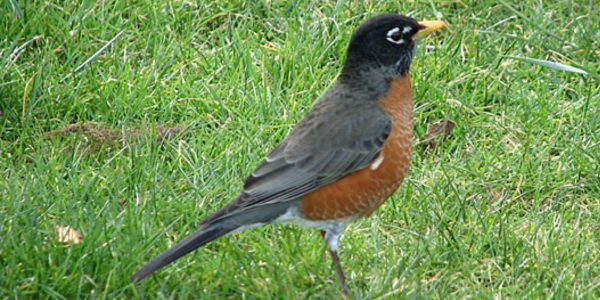
I was wandering through my yard on a chilly morning earlier this month, when I saw a sight that made my heart leap. It was a cluster of robins with their heads poking the ground, searching for a tasty worm.
I couldn’t help but stop and enjoy the scene for a few minutes – that first robin sighting after what seemed like a particularly long winter. It’s no wonder the robin was named Connecticut’s state bird, with its chipper song, red breast, and reputation for heralding spring.
That sighting also made me want to find out more about the birds we so strongly associate with this season. And what I discovered made me love and respect Connecticut’s bird even more.
While American robins are often thought of as the first sign of spring, not all robins migrate during winter. Many stay in the northeast, especially if they have an abundant source of berries, their food of choice during winter months.
My brother Kevin noted recently that he spotted a robin sitting on a bush feasting on berries while ignoring a nearby feeder. Why had he never seen a robin at a bird feeder, he wondered.
The answer to that question is that robins are soft-billed birds, lacking the ability to crack open many seeds. They are also foragers, known for scanning the ground for worms and insects, while avoiding hanging feeders.
But there are plenty of things you can do to attract robins to your yard. One is to offer water. Robins enjoy shallow birdbaths, especially if they have a dripper or fountain.
Another way is to plant fruit-bearing shrubs, like the one my brother noted the robin visiting. Trees and shrubs such as dogwood, hawthorn and holly are natural food sources.
When Siobhan Prout, an educator at Earthplace in Westport, found out I was writing this column, she was thrilled that birds were getting some attention. She recommended three steps that will help attract not only robins but other feathered friends to your backyard habitat.
Her first recommendation is to keep your yard free of pesticides. For robins, this turns out to be especially crucial advice. Robins are known as an indicator species, which means their health gives scientists information about the environment. Because of their foraging nature, often pecking the ground to find insects, they were the first birds to be affected by the pesticide DDT. After it was banned in the early 1970s, the robin population made a quick comeback. By not chemically treating your lawn, you are helping robins and other birds survive and thrive.
Secondly, Prout says to “leave the leaves” around for feathered friends. Especially in winter and spring, those leaves create a habitat for the insects, larvae and worms that robins need to eat. Believe it or not, a messy garden is more attractive to a robin, who sees it as a natural ecosystem.
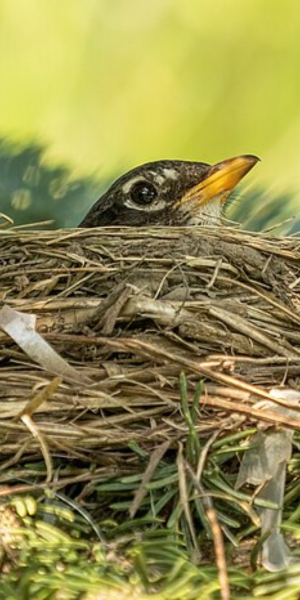
Her last suggestion is to keep pets away from nests. For robins, cats can be a predator, in addition to squirrels, snakes, raccoons and other birds. But dogs can also threaten other feathered friends who are ground nesters.
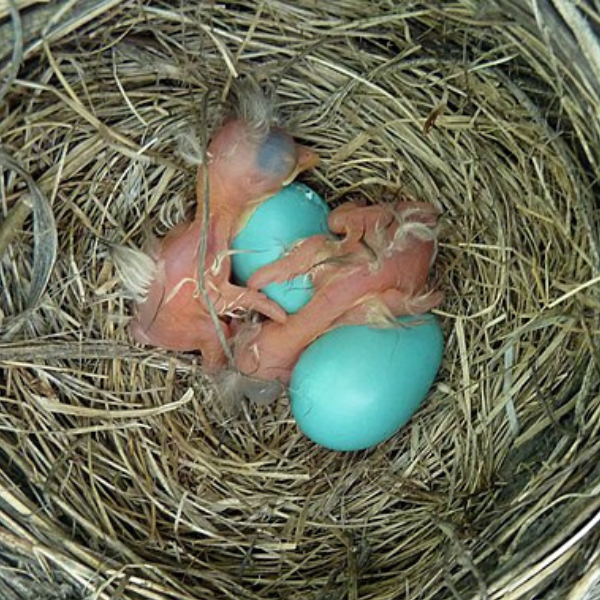
Robins are known for laying their bright-blue eggs in cup-shaped nests. The small eggs hatch in about two weeks, with both parents helping to feed the hungry little ones. About two weeks after hatching, they are ready to leave the nest.
With all their fascinating traits, it is easy to see why the robin was named the state bird in 1943. Another reason is that the robin is a common sight across the state, appearing in both rural and urban settings, and beloved by people of all backgrounds.
So, this spring, when you spot a robin, think about just how cool and complex these feathered friends can be. And maybe, like my brother-in-law George, you will be compelled to break into the song – “When the Red, Red, Robin Comes Bob, Bob, Bobbing Along.”

Kerri Williams
Kerri Williams is an award-winning writer and journalist. She has worked as a reporter at the Norwalk Hour, as Living editor at the Darien News-Review, and managing editor for the Norwalk Citizen-News. For Westport Journal, she is a reporter as well as a gardening columnist, writing ‘Cultivating with Kerri.’ Williams moved from Connecticut to upstate New York in 2021.




Recent Comments