
By Kerri Williams
What did you learn in the garden this summer?
As this year’s gardening season begins to wind down, I posed the question to some local gardening enthusiasts, who shared some discoveries both big and small that came from digging in the dirt this summer.
For Paul Rossi, a UConn master gardener who is on the board of Wakeman Town Farm, it was a summer of “learning things the hard way,” mainly because of the relentless rain that came through Westport.
Because of that rain, watering had to be done much less frequently. “Set-and-forget irrigation doesn’t work,” Rossi said. Instead, Rossi learned to check in with his plants and the conditions instead of following a schedule to “avoid drowning your plants in an already wet season.”
Rossi also learned that heavy rain affects container plants by leaching nutrients out of the pots. Rossi learned to feed more frequently during wet stretches and to keep a closer eye on timing rather than sticking to a schedule when it comes to fertilizing.
The wet weather was tough on tomato plants this year, and Rossi was not immune. His tomatoes were hit by fungal disease, which he blames partly on himself for planting them too close together. “The rain set the stage, but tight spacing made it worse,” Rossi said. “Next year: more breathing room.”
Cathy Gilbertie, who handles communications for Gilbertie’s Garden Center, said she will also remember this summer for its rain. “I think I only watered two or three times all summer,” Cathy reflected during a recent conversation. Her tomatoes were also hit by fungus, which she fought off by stripping the bottom leaves.
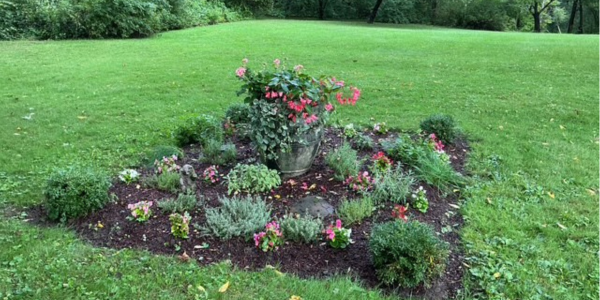
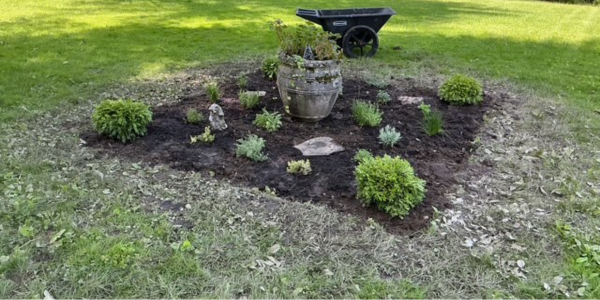
For me, lessons came this summer both from working in the garden and by talking to local experts. Cathy shared her suggestion that every gardener should attempt one new thing in the garden each year. I took that advice to heart, and my husband and I dug a small herb garden around an old urn in our front yard. The basic layout came from a book by Cathy’s dad, Sal Gilbertie, Herb Gardening from the Ground Up. The digging and planting were hard work, supervised by our dogs Abner and Percy.
But my new garden also has many rewards. While working in it, I have encountered worms and toads and bumble bees, who share in the delights of the little garden. It makes me smile when I spot the herbs from my kitchen picture window, and I have learned new ways to put them to use in cooking and crafts.
Another gardener who tried something new this summer is our own editor Doug Weber. He picked up some herb seeds at a bargain price last year and thought about starting them himself. He quickly learned that growing plants from seeds would require costly grow lights and a special seed starter.
“So, I said, let’s just see what Mother Nature can do for us here,” Weber said. Using a mixture of potting soil and topsoil, Weber created little pots of basil, parsley, tarragon, oregano and sage. He kept them indoors in a west-facing window. The basil, parsley and tarragon did the best, and those were transplanted into a new bed outside last spring.
But the lessons don’t end there. Weber endured pests leaving holes in the basil, which he deterred using a castile soap solution, and destruction from a neighborhood groundhog. “Fortunately, the plants have bounced back, and we have plenty of basil for our virtually daily caprese salads,” he said. The experiment makes me think of a gardening lesson passed on by Gilbertie: “Sometimes, where there’s a will, there’s a way.”
Sent from my iPad
The fact that every year is different in the garden “keeps you on your toes,” according to Nathalie Fonteyne, president of the Westport Garden Club and a UConn master gardener. Fonteyne changed garden locations this year after recently moving. She learned that the difference in the environment can be a big one, even if you are only a few miles away. The master gardener motto, “Right plant in the right place,” is even more true when you change location” she said.
For another gardening friend, her lesson came early in the season when she was deciding when to apply mulch to her bed at the LaChat Town Farm community gardens in Weston. Mary learned from her mother that she should wait a bit for the soil to warm up before applying mulch because putting it down too early keeps the soil cool and could stunt plant roots.
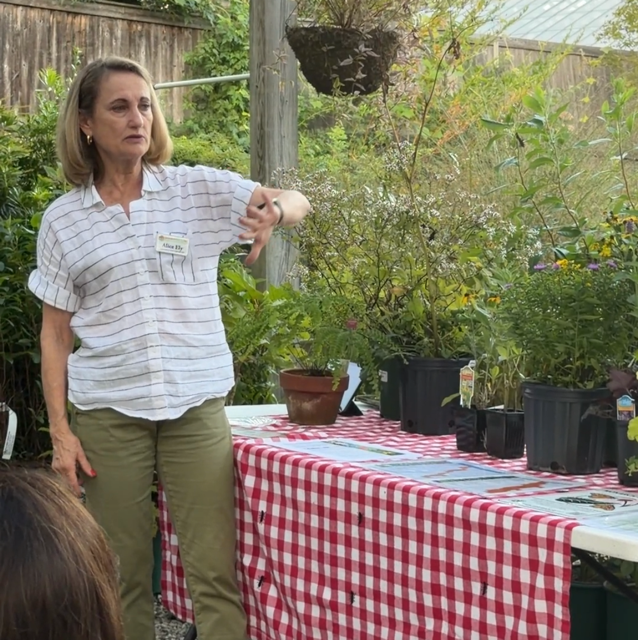
Another way to learn new gardening information is by attending a talk, like the one last week at Gilbertie’s by local gardening expert and UConn master gardener Alice Ely. From Ely’s talk, Gilbertie learned about the Chelsea Chop, a pruning method where you cut back certain tall, perennial plants in late spring to make them bushier, prevent them from flopping over, and extend their bloom time.
So, if you fancy yourself to be a life-long learner, you may just want to take up your trowel and get to work. Because it turns out working in the garden teaches many lessons, big and small.

Kerri Williams
Kerri Williams is an award-winning writer and journalist. She has worked as a reporter at the Norwalk Hour, as Living editor at the Darien News-Review, and managing editor for the Norwalk Citizen-News. For Westport Journal, she is a reporter as well as a gardening columnist, writing ‘Cultivating with Kerri.’ Williams moved from Connecticut to upstate New York in 2021.




Recent Comments