
By Thane Grauel
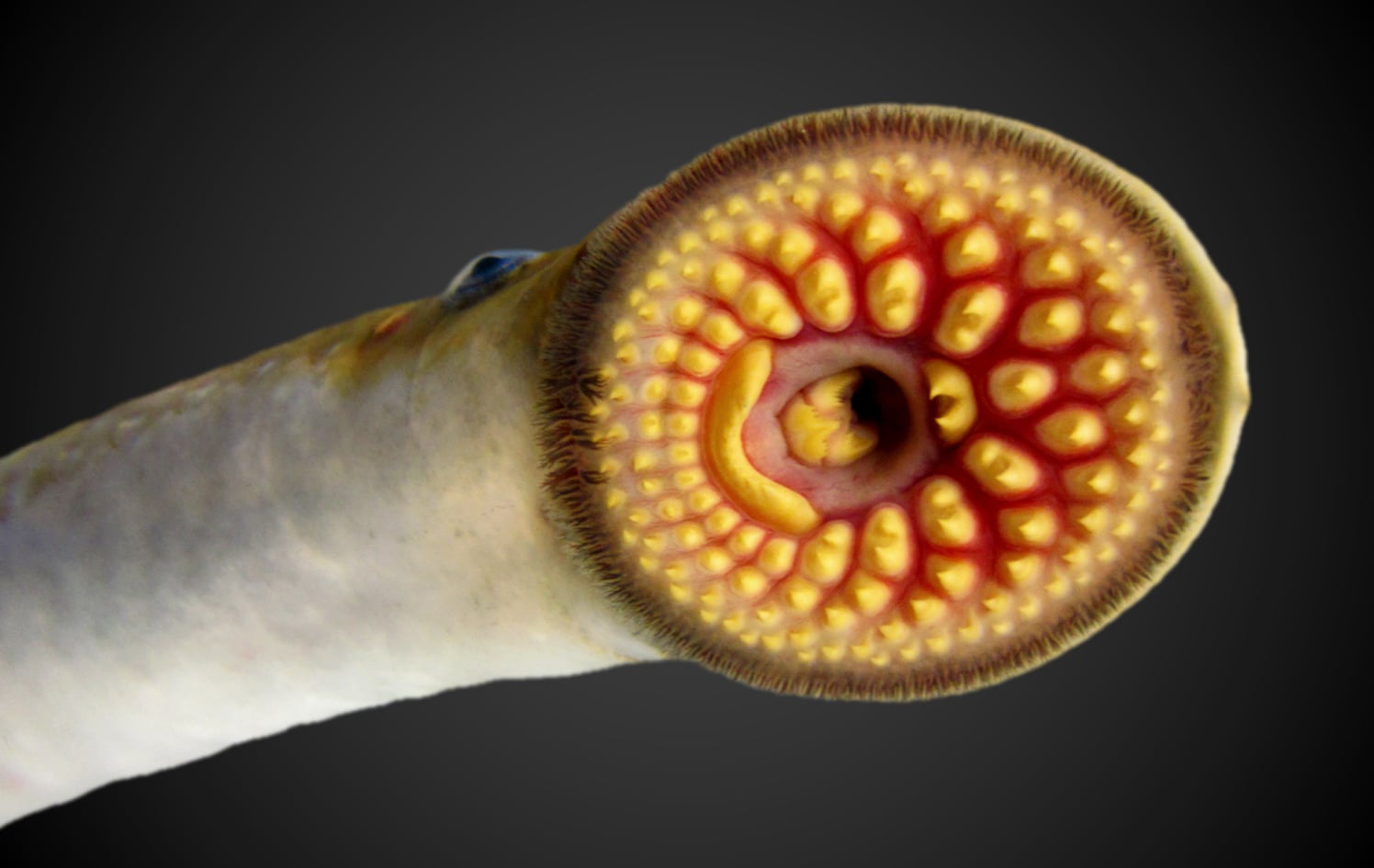
WESTPORT — The sea lamprey has a face only a mother could love.
A cross between a great white shark and an eel, with the business end a razor-like tongue and circular sets of teeth with no other purpose than to latch onto other creatures and auger out their blood.
But there’s not a lot of parental love — lamprey, which spawn in freshwater rivers around the state, die soon after the deed is done.
The eel-like creatures are little known to most of us, but have been a native species before humans were around and, in fact, predate dinosaurs.
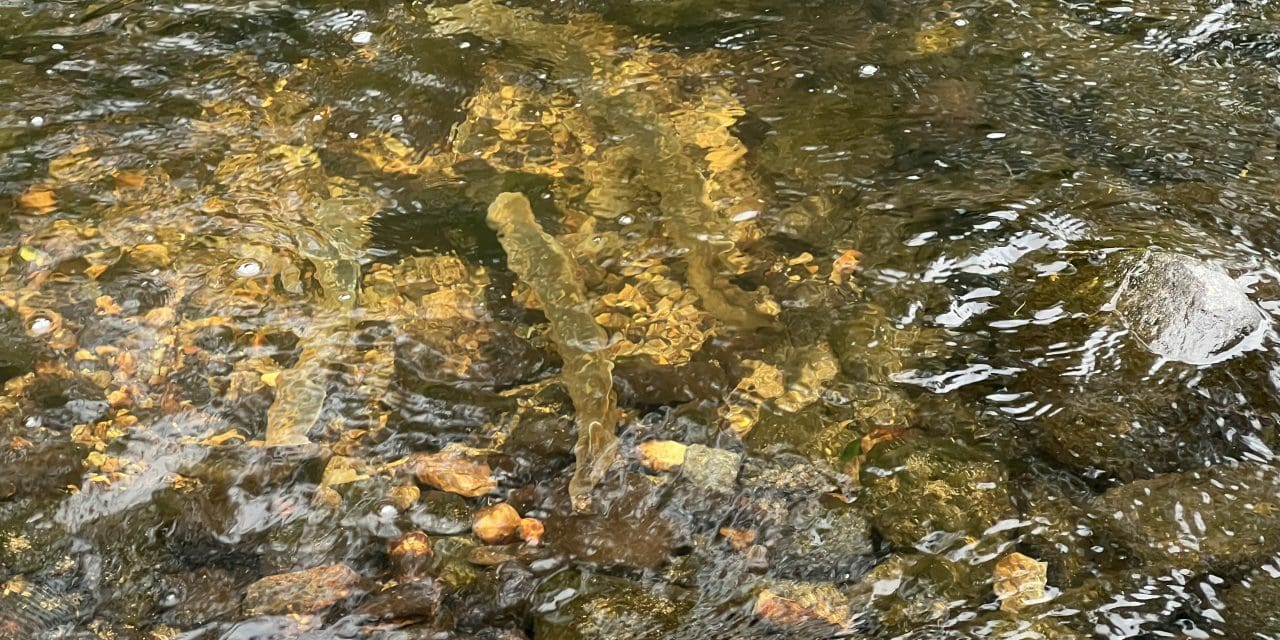
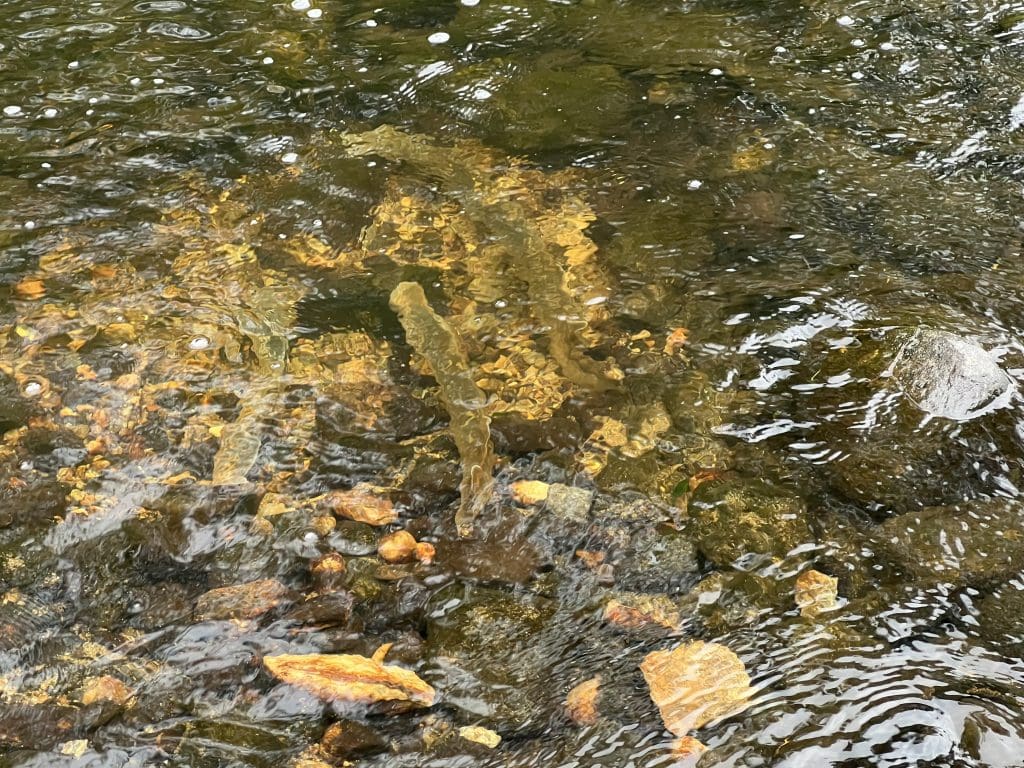
Peter Bogdonowicz, an avid kayaker who lives on Millbank Road, along a stretch of the Saugatuck River that is freshwater and between two dams, spotted some earlier this month.
“I saw what at first thought were eels, because I know there are some eels here,” he said. “But, upon closer observation, there were two or three of them doing some weird rotations.”
He took some photos and a short video.
“I went back, did some online research, and it all kind of added up that they were not eels, with two dorsal fin humps they were sea lamprey,” he said.
He said he saw the male using his suction mouth to move stones.
“That’s part of their nest building,” Bogdonowicz said. “The males essentially change the bed or the river.”
Timothy Wildman, a senior fisheries biologist with the state Department of Energy and Environmental Protection, was glad to hear about Bogdonowicz’s sighting.
He said the appearance and behavior Bogdonowicz saw was right for sea lamprey.
“Just having confirmation that target species are utilizing not only the river but the fish-passage structures that we built for them is just a great thing to have,” Wildman said.
The stretch of the Saugatuck where Bogdonowicz saw the lamprey was above Wood Dam (just north of where Kings Highway North crosses the river, owned by Aquarion) and the dam at Lee’s Pond, owned by the Westport Weston Family YMCA.
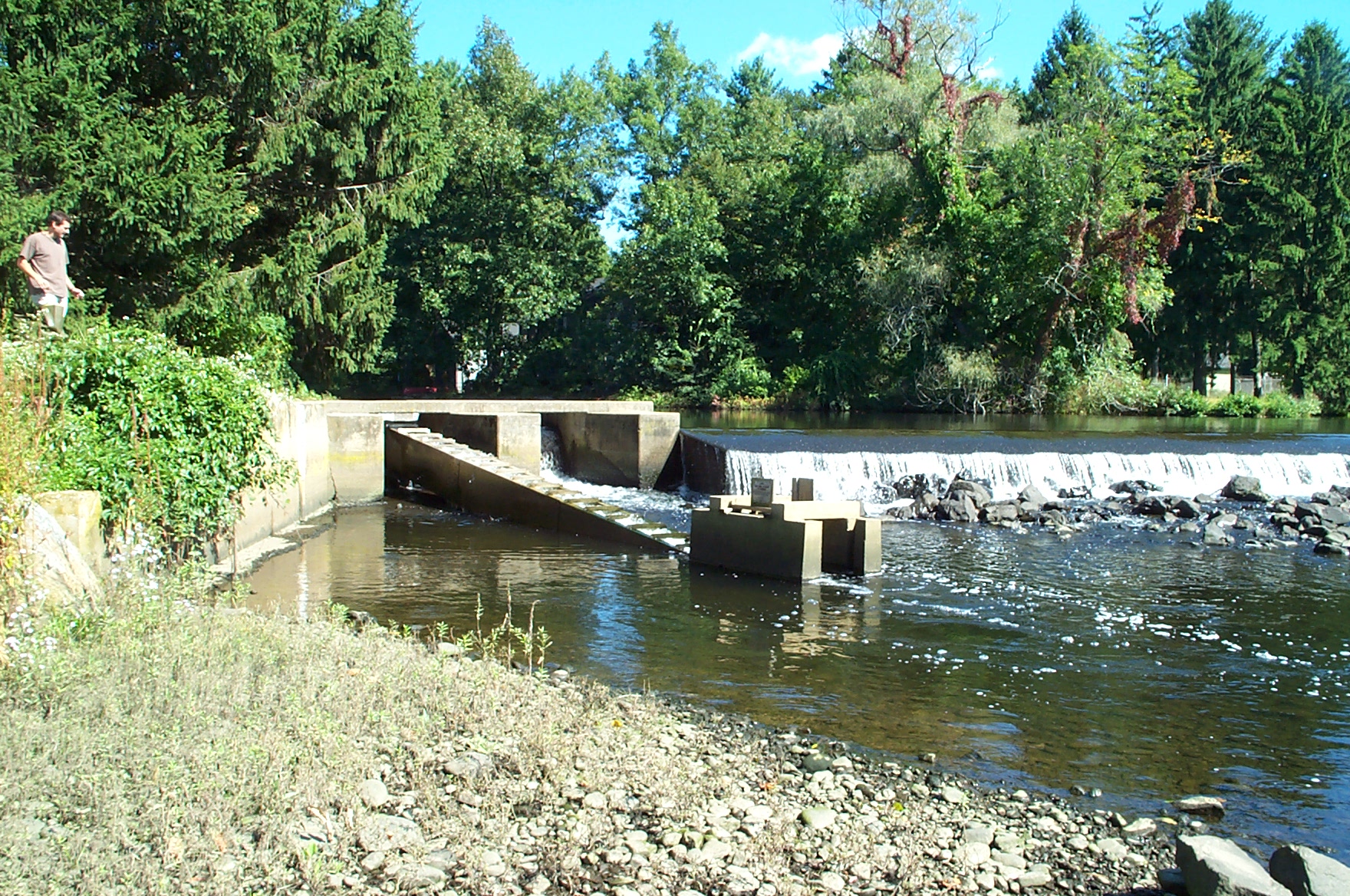
Wildman said fishways have been installed at many dams around the state. He said the department didn’t have any population counts in the area in perhaps 10 years, and that young sea lamprey were stocked there about six years ago.
The lamprey are similar to salmon in that they are born in fresh water and undergo a metamorphosis before heading out to saltwater. But unlike salmon, Wildman said, lamprey don’t seek to spawn where they were born.
A lamprey’s lifecycle
Lamprey live in fresh water about four years before transforming and heading to sea, where they can grow to over 4 feet.
“They feed on fish, burrow into the flesh, and change hosts from time to time,” he said.
After about a year and half of flesh feeding, they head back to freshwater.
“They don’t ‘home’ to a natal river like an Atlantic salmon would do,” he said. “They follow the scent of juvenile lampreys … they simply follow this trail, the males first.”
Wildman said they’ll migrate up a river until they can’t get any farther — some going as far as they can, other not as far, so they distribute throughout the river.
“The male will start constructing the nest,” Wildman said. “He does this by digging a pit and moving the rocks with his mouth, and depositing the substrate immediately downstream.”
“In doing so, he creates a tower of rocks that is clean,” he said. “The sand has been washed away out of this cone of cobbles.”
He said that creates a safe and friendly habitat for the eggs to mature and hatch.
During the building process, Wildman said, the male is emitting a pheromone to attract females.
After spawning, the eggs are deposited in the nest.
“Soon after, they will die,” he said.
A bad rap
Sea lamprey spend about four years of their lives living in Connecticut’s freshwater rivers, but are no threat to people.
It’s only when they go out to sea that they latch onto other animals.
But their behavior in the Great Lakes is different, because of the construction of canals. The lakes are so vast the lamprey act like out at sea, he said.
“Sea lamprey have sort a bad rap, because of what they did to the fisheries in the Great Lakes,” he said.
“They are a pest out there, but they do not parasitize fish in freshwater in Connecticut,” he said. “They’re native, they belong,” Wildman said. “They provide ecological benefits.”
Food for many species, humans included
When they die after spawning, their bodies decompose and become important nutrients for smaller creatures.
The small juveniles heading out to sea are fed upon by many fish, he said.
“They were eaten by the native Americans,” Wildman noted. “They’re still popular in Portugal and Spain.
What do they taste like?
“I’ve tried it and didn’t care for it at all,” he said, describing the flesh as tough, and with a metallic taste, likely from the blood they ingest.
Thane Grauel grew up in Westport and has been a journalist in Fairfield County and beyond for 35 years. Reach him at editor@westportjournal.com. Learn more about us here.








Recent Comments