
By Kerri Williams
For as long as he can remember, Jaime Smith has had a fascination with honeybees. But it wasn’t until his kids gave him a book on bees for Christmas one year that his love of the creatures turned into much more.
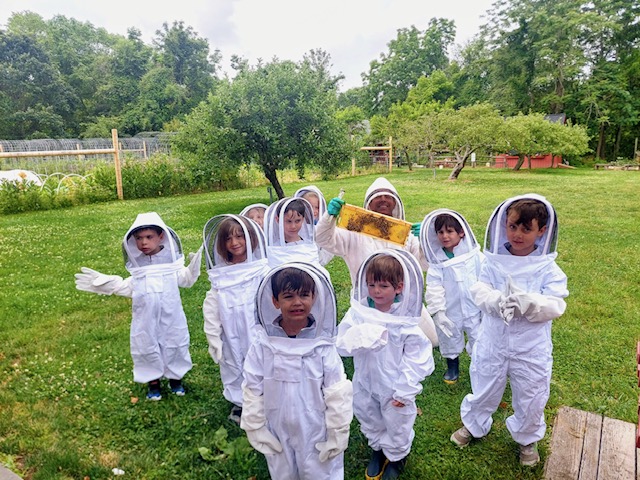
More than 13 years later, Jaime has six active hives on his 1.3 acre Westport property. He also helps oversee the bees at Wakeman Town Farm and gives talks to interested youngsters and adults.
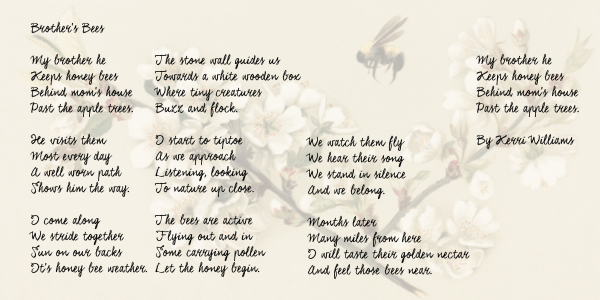
You can hear it in his voice when he talks about his bees – Jaime loves the hobby. I hear that same joy about honeybees when I talk to my brother, Kevin, who also has kept active hives for many years. Kevin followed in the footsteps of my grandfather and uncle, both farmers who had hives near our house. Growing up, I shared our backyard with the bees, who I would watch gathering nectar on each small clover flower.
Like my brother, Jaime gives away the honey that his bees produce. He harvests it each year, usually at the end of July. And he helps the farmers at Wakeman Town Farm do their harvest as well. Last year, he got more than 400 pounds of honey.
“That’s a lot of giving away,” Jaime said.
If you are interested in trying some of that local honey, you can purchase it at the Wakeman Town Farm farmstand, where they sell the honey produced right there.
After receiving that book many years ago, the next step in Jaime’s beekeeping adventure was to attend meetings of the Backyard Beekeeping Association in Weston, which has more than 300 members. As Jaime recounts, beekeeping is a hobby that needs mentorship. Through the club, he was able to ask a lot of questions and learn about the equipment he would need going forward.
Jaime is still a member of the club and now pays it forward by mentoring those starting out. One thing he encourages all starting beekeepers to do is to begin with at least two hives. As he puts it, the hives can “help each other out.”
One of the realities of beekeeping is losing some of the bees, as many as 35 percent, each winter, so the beekeeper must learn how to split or combine hives and sometimes needs to purchase new queens.
Bees face a lot of challenges, including having less habitat and the use of pesticides. One of the first things Jaime did as a beekeeper was to stop fertilizing his lawn and to overseed it with clover. All the animals love the clover, he added, not just the bees.
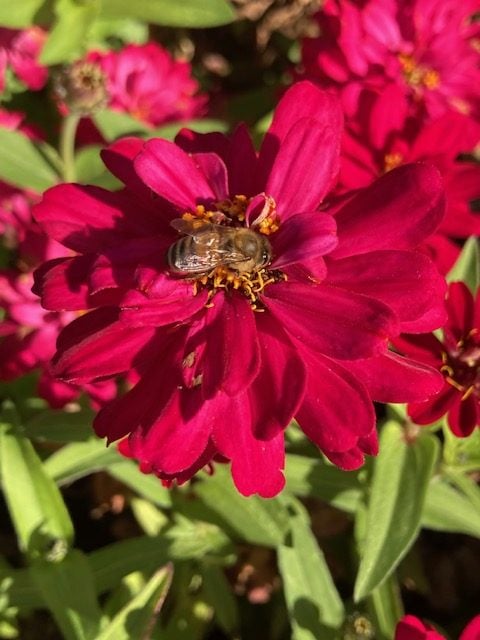
Jaime has never been an avid gardener, but the bees have given him an appreciation for what is in bloom at different times. Now, he is aware of the skunk cabbage in the spring and the goldenrod in the fall, with each giving the honey a distinctive flavor. One hive of bees can cover up to 2 square miles, he said, and those insects are highly efficient in pollinating flowers, often finding each and every one.
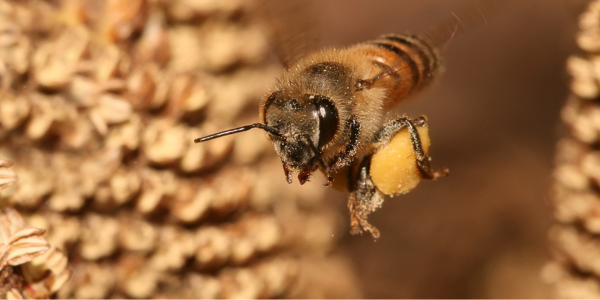
Each day in the summer, Jaime goes out to inspect his hives and note the color of the pollen the bees are retrieving. In Connecticut, pollen can vary from gray and green to red and orange, depending on the source of the nectar.
Another problem that bees face is the varroa mite, which was first discovered to be affecting them more than 40 years ago. The tiny insect, which is the size of a pin head, has affected honeybee populations across the globe.
So, what can we do to help honeybees? As with many pollinators, bees benefit when we stop using pesticides–including tick treatments and fertilizers. And we can plant more native varieties of plants.
As this year’s honey harvest approaches, Jaime can be seen opening his hives once a week to inspect them and check to be sure that queens are laying eggs. It’s something he enjoys doing, as he has never had a fear of being stung. For him, it’s an up-close look at nature in action that fascinates him every time.
“It’s not a perfect science,” Jaime said. “You can do the same thing every year and get different results.” And maybe, for him, it’s that unpredictability that makes life with his bees so interesting and worthwhile.
Kerri Williams
Kerri Williams is an award-winning writer and journalist. She has worked as a reporter at the Norwalk Hour, as Living editor at the Darien News-Review, and managing editor for the Norwalk Citizen-News. For Westport Journal, she is a reporter as well as a gardening columnist, writing ‘Cultivating with Kerri.’ Williams moved from Connecticut to upstate New York in 2021.





Recent Comments