
Words and photos by Linda Conner Lambeck
WESTPORT–The Board of Education unanimously approved the administration of a Counseling Needs Assessment starting this fall, even though some board members remain uncomfortable with some of the questions asked of middle and high school students.
“Some of these questions are very probing, to ask an 11-year-old about alcohol and drugs, to answer online with their name attached,” said Board Vice Chair Dorie Hordon. “It doesn’t feel great to me, especially in this world of” Artificial Intelligence.
Although parents can opt their children out of taking the survey, or have them complete it with pen and paper, Hordon said most parents probably don’t look at the questions.
In addition to substance abuse, students are asked about anxiety related to school and home life, dealing with anger and depression, concerns about identity and sexual orientation and whether they have had thoughts of harming themselves or others.
Hordon said to call the document “a survey” is a misnomer and suggested counselors could get the same information by sitting down and talking to students.
Assistant Superintendent Michael Rizzo said the district’s counseling staff uses the surveys each year to identify students who may need to talk to someone and to design programs based on student needs.
In the last school year, Rizzo said the surveys resulted in six crisis reports and follow-ups with 30 to 40 students. Close to 200 students, he added, wrote that they wanted to talk to someone about anxiety, 130 were concerned about self-confidence and 193 reported being stressed.
The surveys are useful in helping staff meet the needs of kids, Rizzo said.
“You’re right, these are difficult, tricky, high-level questions,” Rizzo said. “That said, we do get responses. Kids do want to talk about these things.”
Rizzo suggested the district could be in a much worse place if such questions weren’t asked.
Questions on Westport surveys vary by grade levels and are aligned with the Connecticut School Health Survey designed to evaluate high-risk student behaviors and well-being. By grade 11 many of the questions revolve around post high school plans.
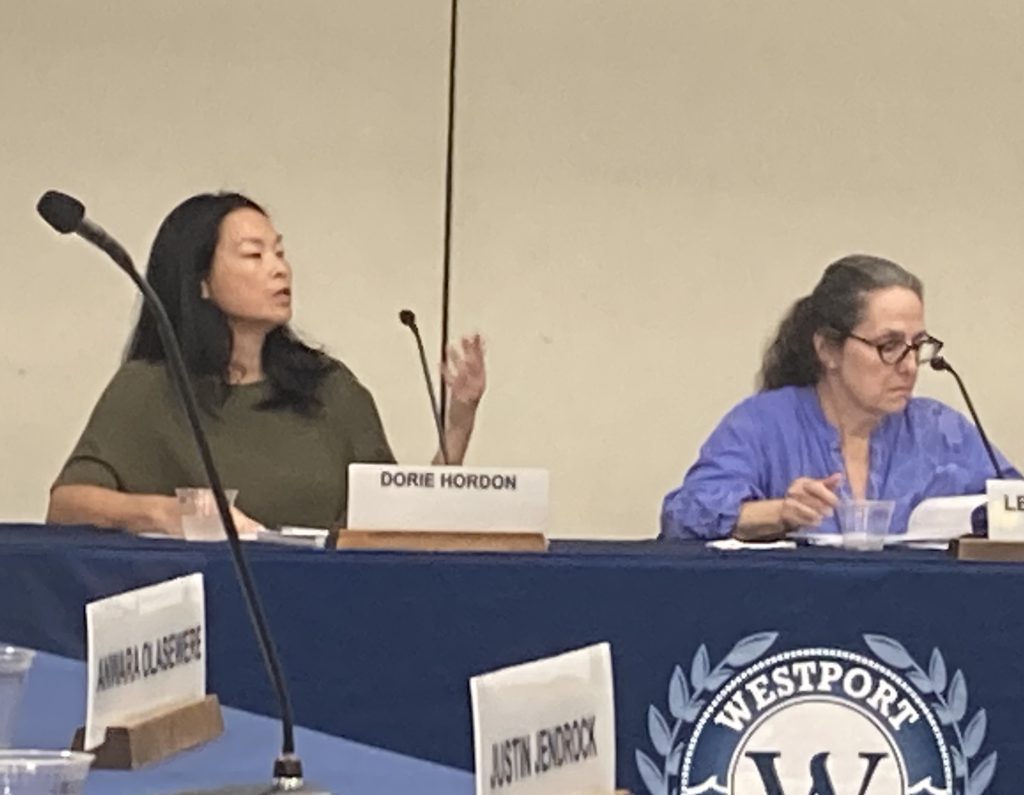
Hordon wondered if kids know they don’t have to answer the questions. She also wondered if some questions don’t put ideas into kids’ heads.
“Will kids think maybe they should be depressed,” Hordon asked, “Does it become self-fulfilling prophecies?”
Board Chairman Lee Goldstein said she does not believe asking questions creates a self-fulfilling prophecy. Families, she added, are given every chance to opt out.
That it is not anonymous and tells staff things they need to know has value that outweighs the concerns, Goldstein said.
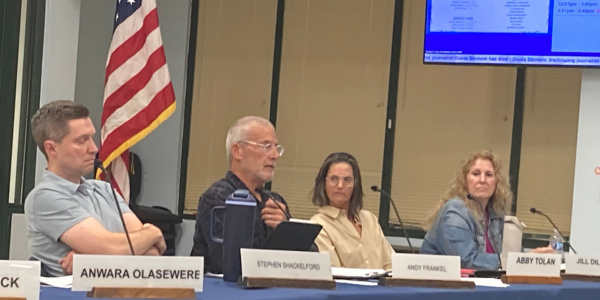
Board Member Andy Frankel, saying he was seeing the survey for the first time, said it seems many of the questions go beyond the role of the school, and touch on situations that should be dealt with at home.
“Preventing harm, identifying suicidal tendencies, sure, there is a good argument for doing (it)” but Frankel questioned the need to ask about sexual orientation or identity.
Unless it impairs their ability to get an education, Frankel said families should be dealing with such issues.
“Your kids have taken these. You’ve never opened the email,” Goldstein asked Frankel.
Rizzo said the role of the school has expanded further than it has in the past.
In some cases, Rizzo said issues raised by the surveys are handled not by school counselors but are referred to other professionals.
Hordon suggested the survey would attract more parent attention if it was labeled “probing mental health questions” rather than just another survey. Her kids won’t be taking them, she added.
Hordon has long contended the district conducts too many surveys.
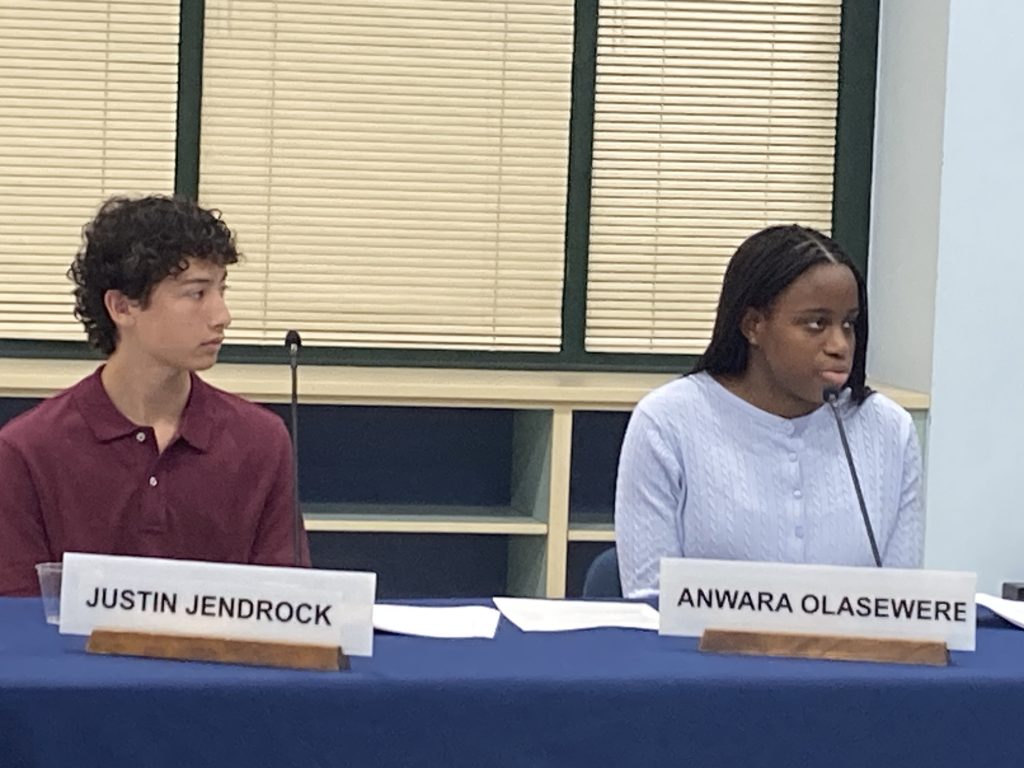
Anwara Olasewere, a Staples senior and a board student rep, said she has taken the survey since the sixth grade and said they don’t put any ideas into her head.
“I think honestly they are important,” Olasewere said. “ A lot of kids may not think (to ask) about these things unless given (the chance).”
Staples junior Justin Jendrock, the other student board rep, said he agreed.
“It’s good to put questions out there … to have a conversation,” Jendrock said.
He added it has always been clear to him that the surveys are optional.
Students in grades 6 through 8 will be the first to take the surveys. Letters will go out to parents this month. The surveys will be administered on a Google platform the weeks of October 5 and 12th. Ninth grade surveys are to be taken in November. Juniors will take them in December and sophomores in February according to letters drafted to go out to parents.

Linda Conner Lambeck
Linda Conner Lambeck covers education for Westport Journal. She was a reporter for more than four decades at the Connecticut Post and other Hearst publications. She has covered education throughout Fairfield and New Haven counties. She is a proud member of the Education Writers Association.







Recent Comments