
By Lucy Dockter
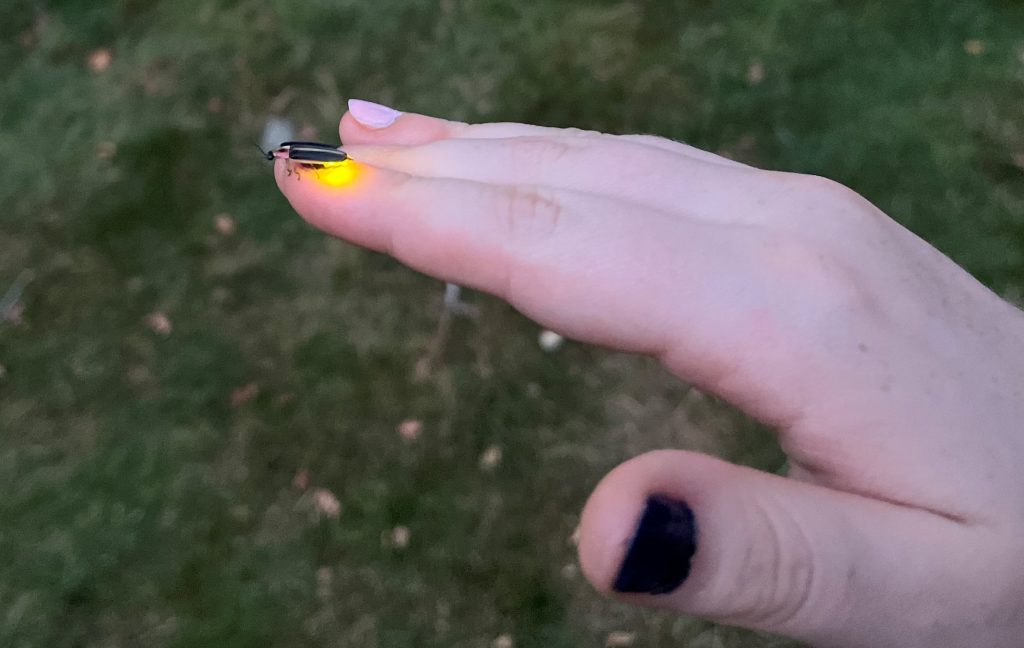
WESTPORT — Poet Rabindranath Tagore calls them “specks of living light twinkling in the dark.” Fireflies have long been a delight to poets and summer enthusiasts alike.
Many people treasure childhood memories of catching fireflies on warm summer evenings. As the sun goes down, the insects emerge to light up the night.
If you’ve noticed this summer is especially colorful in Westport and thereabouts, you’re not alone. Fireflies appear abundant.
Dr. Gale Ridge at the Insect Information Office of the Connecticut Agricultural Experiment Station in New Haven attributes the apparent increase to three factors.
“It’s very likely the food supply because many of the species of larvae are predatory, and there’s often a direct correlation of increased numbers as a result of increased food availability,” she said.
It also could be the weather.
“The nights have been cool and dry, so there’s more chance of flight,” she said.
“And the third element is the human element,” she said. “People are out more because they’re not sheltering, so they’re more likely to see them.”
Ridge said fireflies, like all native insects, are integral components of the food web.
“When we protect and encourage their growth and survival, we are protecting species further up the web, such as birds and snakes,” she said.
Although these insects go by many names — fireflies, lightning bugs, glowworms — they are not flies, or bugs or worms. Fireflies are beetles that use bioluminescence to communicate and attract or locate mates.

Despite local sightings, the population of fireflies nationwide is declining. Most firefly larvae need warm, wet conditions, such as streams, wetlands and damp fields, to grow and survive. However, these habitats are threatened by housing developments, road construction and water pollution.
There are many ways to both protect firefly populations and to attract fireflies to your backyard.
Local conservation groups are working to encourage residents to eliminate pesticides and grow more native, diverse plants in their yards.
David Brant, executive director of Aspetuck Land Trust, said there are manageable, small steps people can take.
“We all like our lawns,” Brant said. “We’re just asking people to not have so much lawn and to take care of it organically, seed with clover and plant native plants.”
The land trust, founded in Westport, has now preserved properties in seven towns.
Becky Newman, director of nature programs at Earthplace, agrees people can take easy measures to help.
“Leaving your leaves on the ground until spring is helpful,” she said. “If you must do a fall cleanup, leave an area [of leaves] off to the side … That will leave at least some habitat for them over the winter.”
Another way to help is to limit light pollution. With fewer artificial lights, fireflies are better able to find each other and mate. Turning off outdoor lights as often as possible will give fireflies a much-needed privacy boost.
Fireflies, along with all native insects, are integral components of the food web. Protection is integral to the larger ecosystem. Brant said there is a biodiversity crisis.
“The insect population has declined 40 percent since the 1970s,” he said, “similar to the bird population.”
There are ways to get involved with research about firefly populations. The Massachusetts Audubon has a citizen science project and is encouraging residents across the country to log firefly views.






Recent Comments