
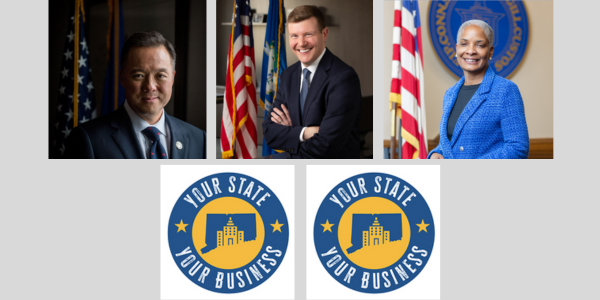
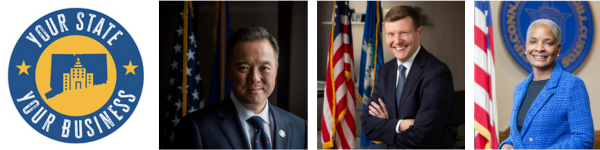
WESTPORT–The Westport Weston Chamber of Commerce has introduced a new speaker series: “Your State, Your Business.”
The series will feature three Connecticut’s officers, discussing issues regarding the state and business, towns and residents.
- March 5: Comptroller Sean Scanlon
- March 19: Secretary of State Stephanie Thomas
- April 2: Attorney General William Tong
Each speaking event will feature a presentation, a moderated discussion and an open question and answer period from the audience. The events are free, but registration is required.
“This is a great opportunity for our business owners and residents alike to find out what is going on at the state level and how it relates to us here in Westport,” said Matthew Mandell, Executive Director of the Chamber. “The topics are diverse, and we’re pleased to be able to bring such knowledgeable people to our town.”
All events will take place at 11am at the Westport Library. For more information on each speaker’s event and how to register, click here.







As someone who has operated a small business in Connecticut for over a decade, I feel compelled to provide a grounded perspective on the realities of running a business here.
Connecticut consistently ranks near the bottom nationally for business climate. According to the Tax Foundation’s 2024 State Business Tax Climate Index, Connecticut was ranked 47th out of 50 states, reflecting high taxes and a complex tax structure that heavily impacts small businesses (Tax Foundation, 2024). Similarly, CNBC’s 2024 “Top States for Business” report placed Connecticut low in categories such as cost of doing business and overall economic performance, citing high taxes and regulatory challenges as major obstacles (CNBC, 2024).
Surveys of Connecticut business leaders underscore these difficulties. A 2023 survey by the Connecticut Business & Industry Association found that the majority of businesses report the regulatory environment as cumbersome and costly, with compliance requirements that divert resources away from growth and innovation (CBIA, 2023). These challenges include not only taxes and fees but also extensive red tape that slows hiring, expansion, and day-to-day operations.
From my experience, talks and panels about business issues, while informative, rarely translate into meaningful change unless accompanied by substantial policy reforms. High taxes, fees, and regulatory burdens continue to make Connecticut a difficult state for small businesses to thrive, and these structural issues are what truly influence decisions about relocating or expanding businesses here. Without addressing these fundamental obstacles, discussion alone is unlikely to improve the state’s competitiveness or attract new companies.
Connecticut needs actionable policy solutions that reduce costs and simplify the regulatory environment for small businesses, rather than just more conversations about challenges that have persisted for years.
If you are interested, here is where i found the information cited above:
Tax Foundation. “2024 State Business Tax Climate Index.” 2024.
CNBC. “America’s Top States for Business 2024.” CNBC, 2024.
Connecticut Business & Industry Association. “2023 Survey of Connecticut Businesses.” CBIA, 2023.