
Story by Meghan Muldoon / Photos by Mark Molesworth
By Meghan Muldoon
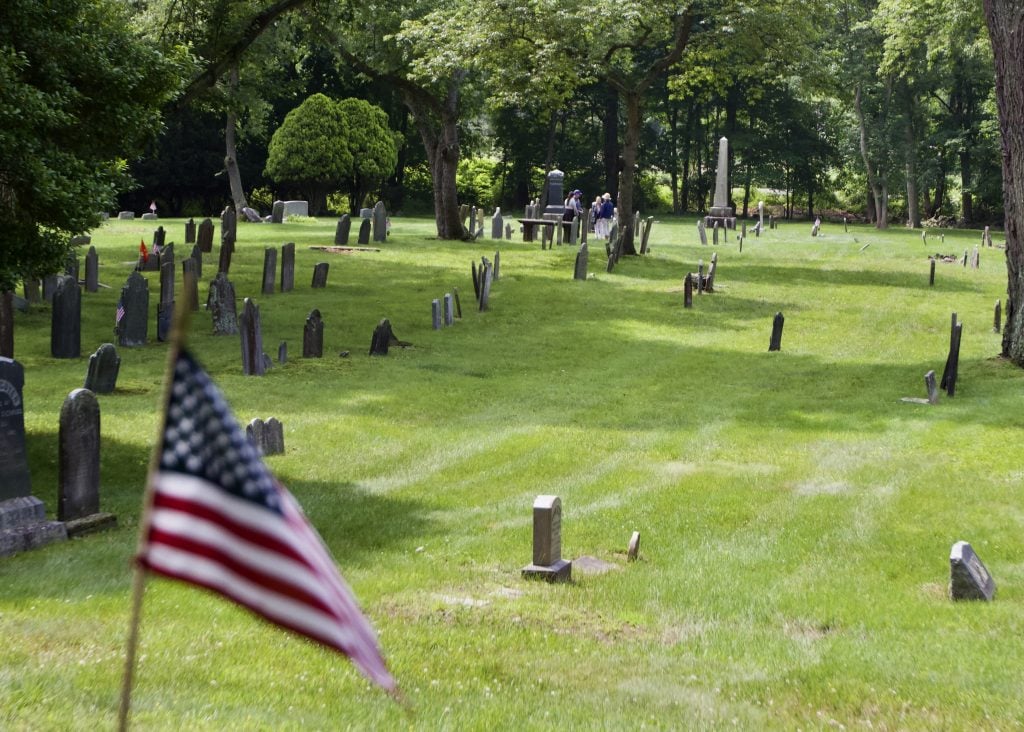
You’ve probably driven past Greens Farms Lower Cemetery a hundred times, never aware of its historic place in America’s founding.
Serenaded by the constant hum of traffic on the adjacent Sherwood Island Connector, the historic burial ground is a 300-year-old monument to over two dozen early patriots whose sacrifices helped forge the nation we live in.
With today’s busy lifestyles and background noise of life, it’s easy to miss, if you’re not looking.
Thankfully, there are people dedicated to making sure we don’t forget the early settlers of Westport who stood up against the tyranny of the British monarchy that wanted to make sure the town failed to exist.
The Westport Museum for History and Culture presented their annual “Path of Patriots” walking tour last Sunday, bringing back to life the stories of these ordinary men who fought in an extraordinary revolution right in our backyards. Held each spring, the tour transforms the centuries-old cemetery into an open-air classroom.
For local resident Jeff Carpenter, who said he drives by the cemetery almost daily, the tour was eye-opening.
“It just puts everything in place,” he said. “There are people buried here that have done things that we don’t even know about.”
Patriots who paved the way for Westport’s present
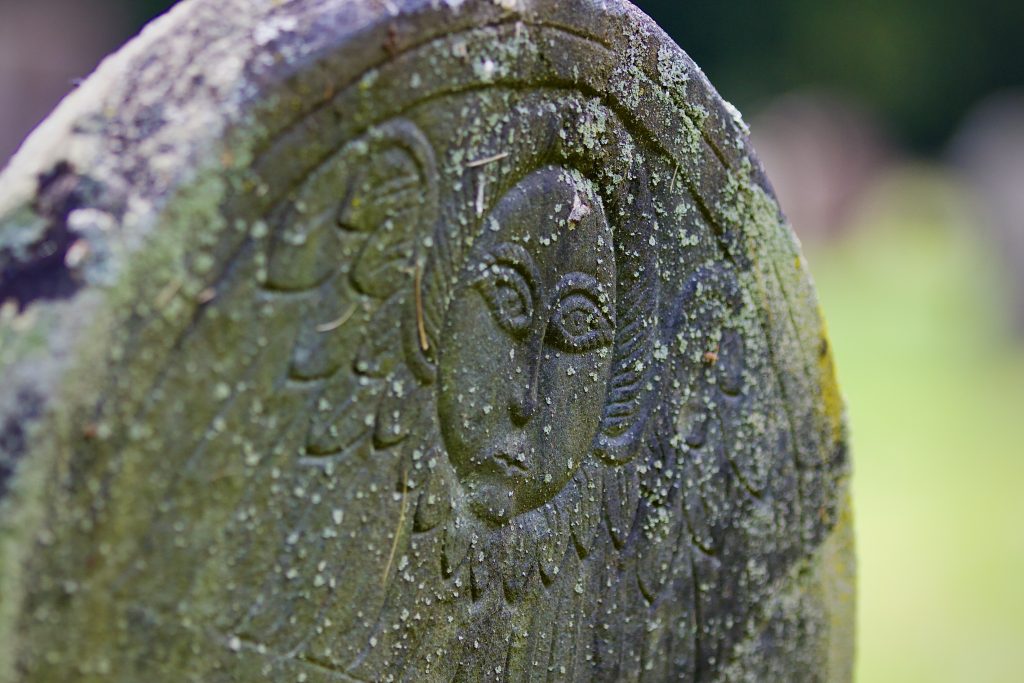
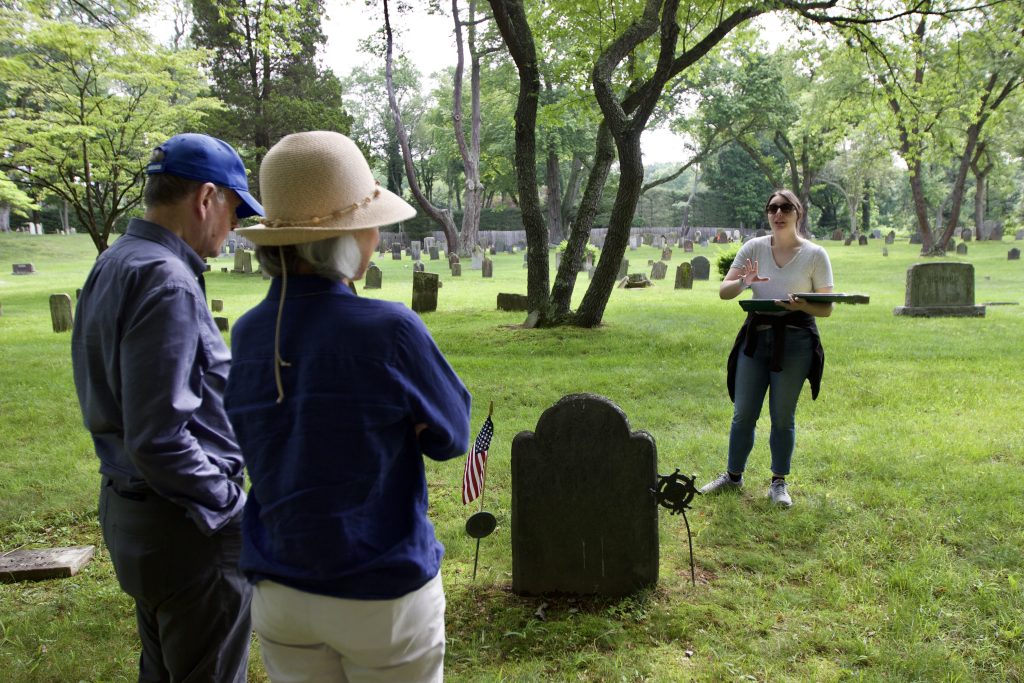
“This is a very historic cemetery,” the museum’s Assistant Director and Tour Leader Nicole Carpenter reminded the handful of participants. “I want to introduce you to Lieutenant Samuel Elmer,” she says standing behind a lichen-covered gravestone. Stuck in the ground beside the tomb marker is a small dollar-store flag.
For Carpenter, the history shared during the cemetery tour holds meaning in today’s world.
“We all know the big players: Hamilton, Washington, Benjamin Franklin, and Marquis de Lafayette but it’s important to understand that there were real people serving during that revolution on both sides,” Carpenter said. “Understanding those personal struggles and stories help us understand the past and hopefully help us appreciate and fight for those ideals today.”
One of those local heroes was Lieutenant Samuel Elmer, who met his end in April 1777 during the Danbury Raid, a British incursion that began and ended in Westport, which was part of Fairfield at the time.
Imagine a small army of British troops, guided by roughly 300 loyalists marching from Compo Beach toward Danbury. They first encountered American resistance near the site of today’s Trader Joe’s in the Compo Acres Shopping Center, where many Westporters now shop for groceries and buy prescriptions at CVS.
“They fire on the British behind some stone walls,” Carpenter adds. “Very guerilla warfare-type tactics but that is where they meet their first resistance.”
The redcoats burned much of Danbury after they failed to commandeer any wagons to transport seized supplies and retreated through Ridgefield and Redding, culminating in the Battle of Ridgefield. As they fled back to Compo Hill where their ships awaited, they were pursued by a patriot force raised by none other than Benedict Arnold, a Norwich-born British officer who changed sides to fight alongside the colonists and became a hero of the Revolutionary War.
During the third bayonet charge of the battle, Elmer was killed. He was only 24 years old. Transporting his body back to his hometown of Sharon in Litchfield County was too costly, so he was buried in Westport beneath a stone inscribed with a poem honoring his sacrifice.
Joshua Couch, another local patriot, lived a long life after the war. Born in Fairfield in 1750, Couch enlisted just days after the battles of Lexington and Concord and served in multiple northern campaigns, including the siege of St. John’s and the capture of Montreal. He reenlisted several times and later joined the “whaleboat service,” which patrolled Long Island Sound and gathered intelligence on British troop movements across Long Island Sound. Couch survived the war and died in 1841 at the age of 91.
Sacrifices come in different forms
Not all sacrifices came on the battlefield. Nathan Gottfried Jr., who died of disease at just 22, was one of many who perished in miserable camp conditions. Carpenter pointed out that more American Revolution soldiers died on a sickbed than on the battleground. Nathan’s father, Nathan Sr., enlisted months later and survived the war but ultimately lost a second son, Benjamin, to the cause.
“The conditions in army camps are very, very poor, especially during wintertime. There are food shortages, there’s extreme sickness and disease spreading through these camps and that is what Nathan, Jr. passes away from,” Carpenter explains. “It’s actually not until World War II that the leading cause of death [for soldiers] is not disease.”
Carpenter also shared stories of community leaders like Reverend Hezekiah Ripley, minister of Greens Farms Congregational Church, and his wife Dorothy. Local legend says she saved the church’s communion silver during the 1779 British raid and burning of Fairfield by throwing it down a well. That silver will be displayed at the Westport Museum next year as part of the nation’s 250th birthday celebrations.
Also buried in Westport is John Burr, a distant cousin of the former vice president Aaron Burr, who famously killed Alexander Hamilton in a pistol duel in 1804. John Burr joined the colonists’ cause at the unlikely age of 65. Though he never saw combat, John Burr helped train troops at West Point.
Towering over many other stones in the cemetery’s center is the large tabletop grave of John Hyde, a wealthy supporter of the Revolution and the area’s largest slave owner. Though Hyde never fought, he funded the war effort, and his story underscores the contradictions of a war for liberty waged in a nation that still tolerated bondage.
“These men were fighting for freedom,” Carpenter said, “but again, who did that freedom extend to?”
The cemetery itself becomes a silent storyteller—one that reminds all who visit that the founding of the nation was not only fought on distant battlefields but also lived out in backyards, churches, and towns like this one.
The Patriots Path tour reveals Greens Farm Lower Cemetery is a vivid doorway into Westport’s Revolutionary past that is well worth opening.
Freelance journalist Meghan Muldoon, a former Capitol Hill staffer and attorney, has reported on state government and local news for WDBJ-7 in Roanoke, Va. and also for the Connecticut Examiner.








You should check out the small cemetary at the corner of Kings Highway N and Wilton Rd. Plenty of revolutionary war era folks buried there and pretty neglected.