
By John Schwing
WESTPORT — As the Board of Finance cruised through a second night reviewing the town’s 2025-26 budget, the proceedings Tuesday night took an abrupt — and bumpy — detour when funding for the Westport Transit District arose.
Just as it has in several prior years, a $342,360 share of the transit district’s overall $491,842 budget request — to operate the Wheels 2U on-demand shuttle van service to and from the town’s train stations — sparked a lengthy, often heated debate over the value and cost-effectiveness of the program.
And just as it has in several previous years, the finance panel voted to cut the funding for Wheels 2U, leaving in place money for the transit district’s ride services for the disabled and elderly.
But in doing so, several board members tacitly acknowledged, just as in years past, the Representative Town Meeting is likely to overrule the finance board and restore the Wheels. 2U money when it takes a final vote on the budget in May.
Small amounts, big questions and a “defensive crouch”
Debate over transit funding and an even smaller $25,000 cut from a $105,000 allocation for the Earthplace environmental center consumed the lion’s share of the three-hour meeting, as the financiers otherwise gave unanimous support to roughly $87.2 million in town government expenditures for the next fiscal year starting July 1.
That side of the municipal ledger, combined with a $150.4 million education budget — approved unanimously by the finance board in a half-hour meeting Monday night — move on for final action by the RTM.
Finance Chair Lee Caney began the budget session saying he felt the town-side spending requests for 2025-26, for the most part, were “lean,” with increases primarily tied to contractual obligations. The $87.5 million request initially submitted to the board earlier this month by First Selectwoman Jennifer Tooker is about 3.8 percent higher than current spending.
The largest departmental account is public safety, encompassing the Police and Fire departments, at $27.8 million, up from current spending of $27 million.
The next largest account is for town employee pensions, “OPEBs” (other post-employment benefits) and insurance, at nearly $21 million. Those costs are projected to chart the largest increase, about 9.6 percent, among all the town’s general fund accounts.
The third largest town-side account is for public works, with a requested $14.1 million, up from $13.8 million in the current budget.
Each of those accounts, as well as most others proposed under the general fund heading, won unanimous backing from board members with few comments or questions.
However, board member Jeff Hammer, echoing a warning he gave at Monday night’s budget hearing, said future spending plans will be held to tighter scrutiny. The town, he said, needs to adopt a “defensive crouch” fiscally in anticipation of deep federal spending cuts. As their impact falls on the state level, aid to towns will ultimately be felt, he said.
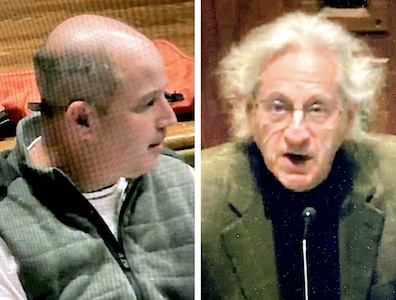
Brian Stern, a former Board of Finance chairman, underscored that argument when he addressed the board, urging the panel to ensure future spending proposals are considered in the context of keeping Westport as affordable as possible. He also said officials need to be held accountable for ensuring better productivity by town employees and programs.
“Weaning” Earthplace from town funding
Nonetheless, the budget review progressed harmoniously until questions arose over funding for Earthplace, a private nonprofit that manages a range of environmental and educational programs on 62 acres off Woodside Lane.
Caney wanted to “wean” the group from town funding, suggesting the proposed allocation be cut by $25,000 to $80,000. Starting to reduce the town’s annual financial support, he added, is a “parity issue” since other local nonprofits get no municipal aid at all.
Board member Danielle Dobin disagreed, noting that Earthplace grounds are open to the public year-round without charge, and its Harbor Watch program — which among its services provides testing of local waterways — is a valuable asset. She also said that if the organization were to suffer future financial problems, it might be forced to sell off part of its land holdings for development.
Despite pleas by Tony McDowell, the Earthplace executive director, to hold back the fiscal knife, the financiers voted 5-2 to impose the cut.
Been there, done that — Wheels 2U debated again
The kerfuffle over Earthplace support, however, paled in comparison to the dispute that erupted over funding for the Wheels 2U service in the Westport Transit District’s $491,842 budget request.
Member Liz Heyer opened the debate, saying she planned to propose eliminating the Wheels 2U funding, while also acknowledging the RTM is likely to restore it. But, she added, if the “budget boss” RTM does decide to overrule the finance panel, it should be held “accountable for it. If they are going to fund it year over year over year, then they should figure out how to run it so it is either cost effective or justify that it is truly meeting the needs of the people it is meant to serve.”
Caney, a past critic of Wheels 2U, fired another salvo. “We’ve heard the same story over and over and over and over again every year … ad nauseam,” he said.
The program, he added, “has never worked” as public transportation, citing what he said is the $70 per ride it costs. At that rate, he said, it is “essentially an Uber service” taking people to and from the railroad stations. And even though the service now operates mini vans, as opposed to the diesel-powered buses used in the past, it still is not environmentally friendly, he said.
Dobin, however, took issue with Wheels 2U critics. The transit district, she noted, is one of the few Westport services to receive direct state subsidies and Wheels 2U can help inoculate the town against future grant “de-prioritization” if controversial “Work Live Ride” legislation is adopted by the General Assembly this year. If that occurs, she said, the town could argue it already has a “Transit Oriented Development,” which the legislation is designed to promote, since Wheels 2U provides rides to the train stations from Westport’s “inclusionary housing zone” along the Post Road.
Without that kind of buffer, Dobin added, the town stands to lose state grants for infrastructure projects, such as bridge replacements and road/sidewalk improvements, which instead would be given priority consideration to other communities with “TODs.”
To those who think Wheels 2U is wasteful, Dobin said without the rides program the threat to Westport’s infrastructure grants from the state is “real.” The difference is, she added, “I think we have different interpretations about how to best protect the town’s bottom line.”
“It’s not there to make make money, it’s there to provide a service”
Peter Gold, one of the transit district’s two volunteer directors and an RTM member from District 5, came to the Town Hall podium to defend the Wheels 2U funding request.
He bluntly disagreed with Caney’s contention that Wheels 2U rides, in effect, are subsidized at the rate of $70 each. That figure is false, according to Gold, who said the $2 fares are subsidized by $8.06 from the town and $16 from the state.
The shuttle service provides approximately 30,000 rides yearly, and is managed by the Norwalk Transit District for roughly $15,000 annually. But formally merging with the Norwalk district, as promoted by the state and several board members, would diminish the attention that Westport now receives from the agency, Gold contended.
Resisting several attempts by Caney to cut him off, Gold forged ahead in defense of Wheels 2U. He said the transit district would welcome more support from the town to hire a professional to address cost-efficiency issues raised by Board of Finance members, including the separate para-transit rides programs for the disabled and elderly, which he called “extraordinarily expensive.”
But as for Wheels 2U’s cost effectiveness, Gold noted there is no public transportation system in the country that is not subsidized. “It’s not there to make make money, it’s there to provide a service,” he said, much like police, fire and education services also are not profit-making.
The 2025-26 budget request for the Wheels 2U program is essentially “flat,” Gold said, with the increase in the transit district’s overall budget attributed entirely to rising costs for rides provided to the disabled and elderly — which he suggested at some point may be absorbed into the Wheels 2U program.
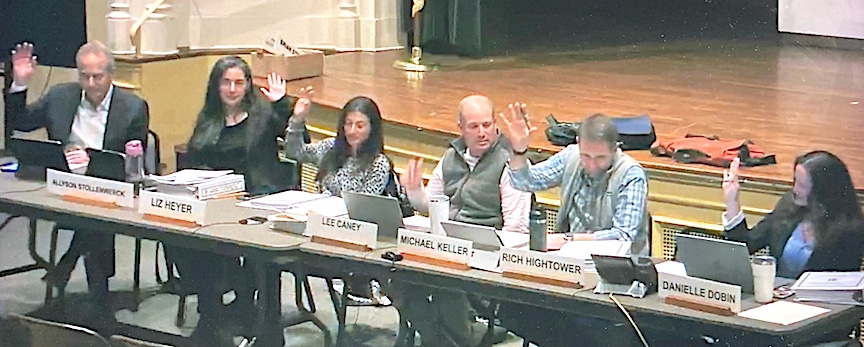
His arguments failed to sway the finance board, which voted 5-2 to eliminate $342,360 designated for Wheels 2U from the transit district budget, leaving it with $149,482 for the disabled/elderly rides services.
Dobin was joined by Allyson Stollenwerck voting against the funding cut.
John Schwing, consulting editor of the Westport Journal, has held senior editorial and writing posts at southwestern Connecticut media outlets for four decades. Learn more about us here.








Recent Comments