
by Thane Grauel
WESTPORT — A new Code of Conduct for Representative Town Meeting members was unanimously endorsed by its creators Monday night.
The RTM Code of Conduct Special Committee unanimously forwarded the new document, which outlines behavior and etiquette among these elected officials, to the full RTM for consideration most likely at its Sept. 14 meeting.
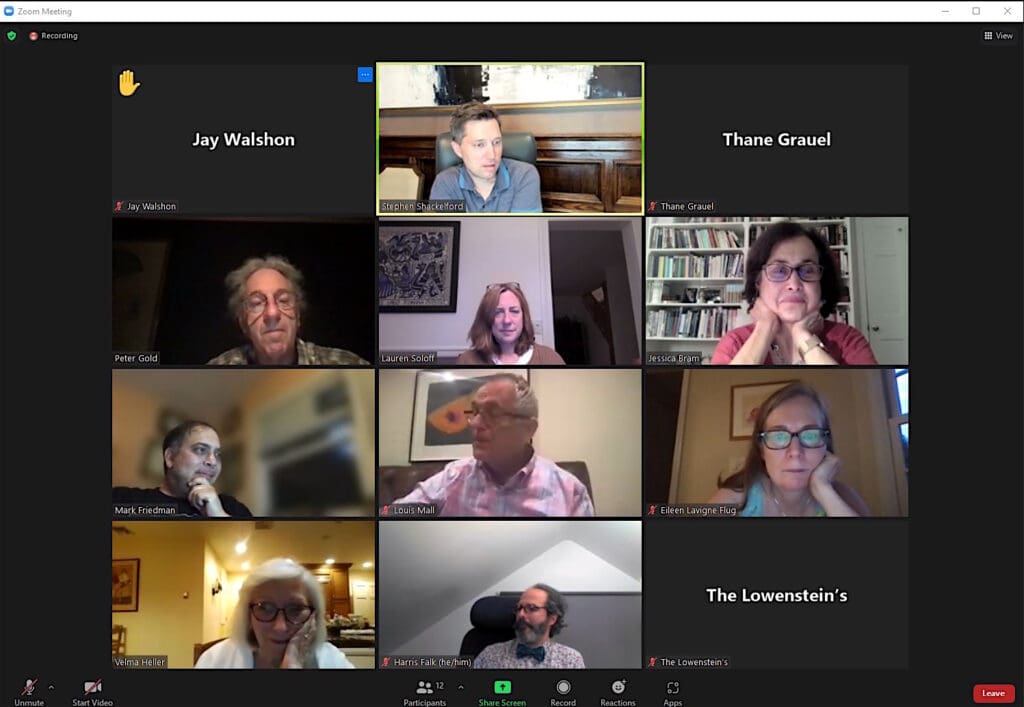
In a Zoom meeting the committee worked through another session on the document, whittling it down from seven to six pages.
It voted first to recommend that the full RTM consider adopting such a code, and then to suggest the RTM specifically consider the document it had created.
The committee worked amicably, balancing disagreement and compromise, but the process suggested that a robust debate could be likely amongst the full RTM.
The seven-member group named the document the “Westport Representative Town Meeting Conduct Guidelines and Expectations.” It spells out the need for RTM members to treat each other — and everyone they deal with — with respect.
“This document describes the expected behaviors, manners, and courtesies of Representative Town Meeting (RTM) members as we carry out our vital commitment to the Town,” its Statement of Purpose reads.
Committee members had their differences on a number of topics, including statements on diversity and inclusion, the use of the word “sarcasm” in how to address the public, and whether or not members should have to state that they were involved in helping to draft proposed ordinances.
The diversity issue was spurred by the third paragraph of the Statement of Purpose, which reads, “The RTM strives to engender an inclusive culture.”
“It’s like we’re saying, ‘Treat everyone equally,’” said committee member Jessica Bram, District 6. “Why would we even need to say that?”
“First of all, the culture of the RTM is made up of the people who are elected to the RTM, and we have no control over who’s elected to the RTM or not,” said committee member Peter Gold, District 5. “If no people of color run, if no women run, or no transgender people run, we can want to be as inclusive as we want to be, but we can’t do anything about bringing them into the RTM.”
Richard Lowenstein, RTM District 5, spoke plainly.
“Not to be blunt about it, any a–hole can get elected to the RTM,” he said.
“But once you’re on the RTM, a code of conduct is expected,” he said. “And I don’t think that has any place suggesting the kind of people or the diversity, all those issues. They’re lovely, they’re good, but they don’t really belong in a code of conduct.”
The committee voted to the keep the paragraph on diversity and inclusion. Committee members Mark Friedman, District 3, Lauren Soloff, District 9, and Shackelford voted in favor.
Bram and Gold voted against it, while committee members Noah Hammond, District 4, and Kristin Purcell, District 1, were not in attendance.
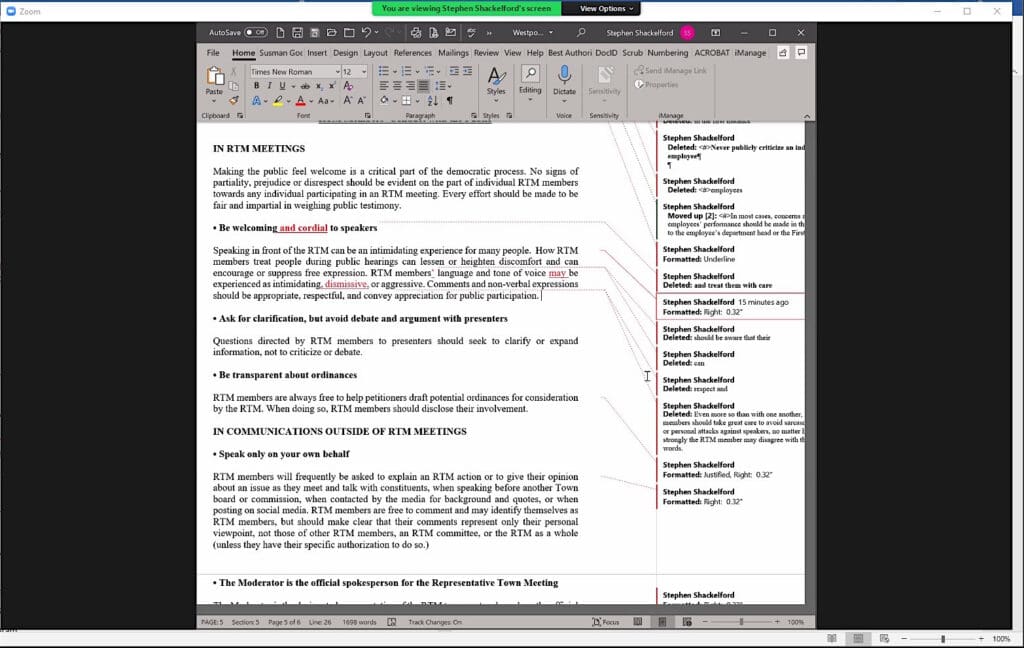
There were also concerns about using the word “sarcasm” in the line, “RTM members should take great care to avoid sarcasm towards or personal attacks against speakers, no matter how strongly the RTM member may disagree with the speaker’s words.”
“I don’t like it,” said Harris Falk, RTM District 2.
“Is it one of those things like, ‘I can’t define pornography, but I know it when I see it’ type of things?” he said. “I mean, I don’t know sarcasm, but I know it when I hear it?”
“Was that sarcastic, what I just did?” he asked.
The committee dropped the sentence.
The last real disagreement was over the call for RTM members to disclose their involvement in helping petitioners draft proposed ordinances.
Louis Mall, RTM District 2, said his primary purpose for attending the meeting was to see that the provision make it before the full RTM.
“Transparency, isn’t that what we ask of everyone else?” he said.
Gold was adamantly opposed.
As a member of the RTM’s Ordinance Committee, he said, he frequently gives input to people on crafting an ordinance, regardless of its specifics.
He said there was a difference between a spokesperson for an ordinance and someone offering experience to help them. How and when to report involvement were unclear, he said.
The committee voted to tweak the provision to read, “RTM members are always free to help petitioners draft potential ordinances for consideration by the RTM. When an RTM member has played an instrumental and ongoing role in formulating an ordinance, the RTM member should disclose this involvement when participating in meetings addressing the ordinance.”






Recent Comments