
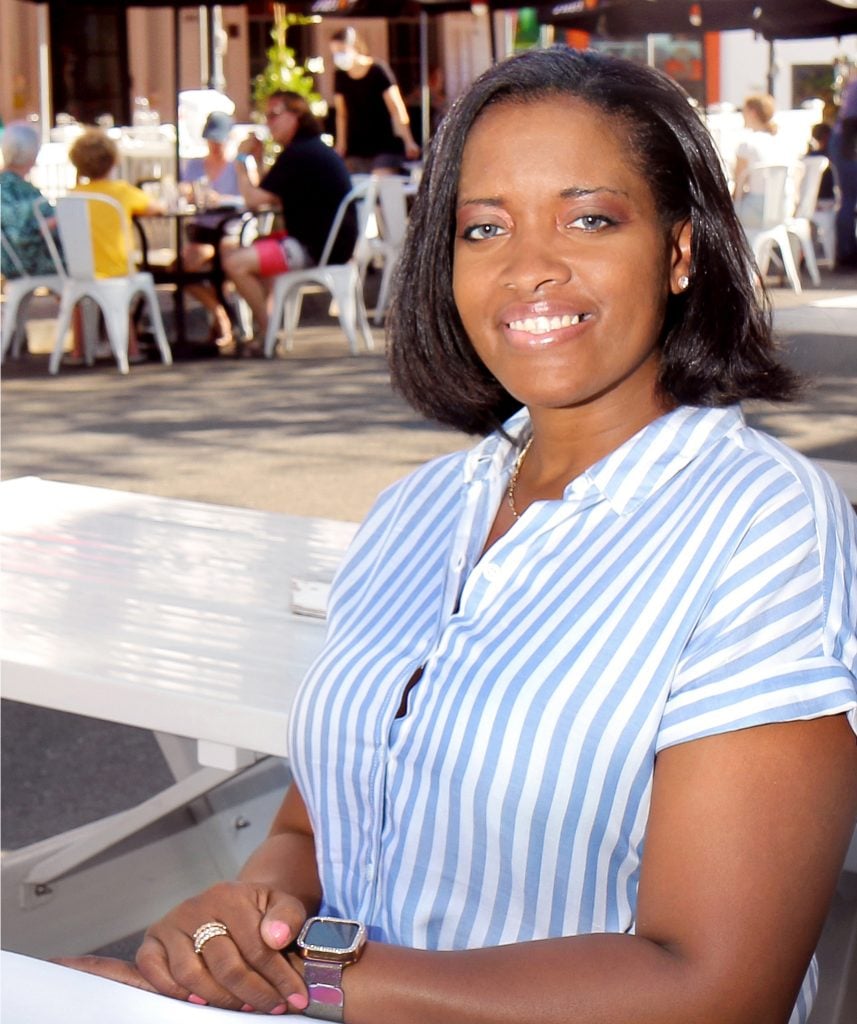
Candidates running in the Nov. 8 elections were asked by the Westport Journal to provide information for readers about their background and position on several major issues.
________________________________
BIOGRAPHY: I grew up in Cherry Hill, N.J., with my parents and two older brothers and moved to Fairfield County about 20 years ago. I’ve been a Norwalk resident for the past 15 years. I’m a single mother, a daughter, and a sister. And my role as a mother, a daughter, a sister and a woman drive my commitment to a more affordable Connecticut, safe communities and excellence in education for our children.
By trait, I’m a seasoned recovery coach with a passion for helping others. I worked with the Community Care Team at Norwalk Hospital where we met with over 30 community and municipal providers on a weekly basis to help at-risk individuals achieve wellness in all social determinants. I also volunteer at the Connecticut Community for Addiction Recovery (CCAR). Helping people is my passion. But that’s only part of my story.
I’m a conservative yet independent-minded thinker who listens to all voices. I am also no stranger to strong advocacy efforts when it comes to legislation as a member of my local prevention council, The Norwalk Partnership, as well as the alcohol and marijuana subcommittees. Last year I was appointed to the state’s Task Force to Study Peer Services, and am part of the Department of Mental Health and Addiction Services’ (DMHAS) Peer Certification Advisory Committee. I also belong to the PTA and Equity Committee at my daughter’s middle school in Norwalk. I am genuinely embedded in my community and believe in the power of volunteer-led nonprofits, community organizations and churches to transform lives.
In short, I’m a community-minded leader who, through honesty, open-mindedness and selflessness, has consistently demonstrated a passion for helping others.
AFFORDABLE HOUSING: What is the obligation of the communities you seek to represent to provide affordable housing? If you agree more needs to be done, what is the best way to accomplish that goal? Would repeal of the 8-30g law help or hinder those efforts?
8-30g may have come from a place of good intentions, but the result after more than 30 years is less — not more — affordable housing. The 143rd district is a great place to look when talking about 8-30g. Norwalk, as a result of over-development, is way ahead of the 10% affordable goal. Westport, with only 4%, is in the middle of a four-year moratorium and off-limits — for now — to predatory developers.
Most folks don’t understand how 8-30g works. For instance, only “deed-restricted” units built after 1990 count. Deed-restrictions allow the state to interfere in who lives where. You may qualify for affordable housing this year, but if your income goes up, you may find yourself looking for a new place to live. I support naturally occurring affordable housing, so people don’t lose their home because their economic situation improves.
The Hiawatha Lane project has been in and out of the courts for nearly 20 years. Only the lawyers are happy. Neighbors worry that this project will destroy — in the name of affordability — one of the few affordable neighborhoods in Westport. 8-30g is good for big developers, lawyers and the political class. It’s not good for you and me.
TAXES: The state has amassed record surpluses in the last few years. What are your priorities for state finances — cut taxes, fund new programs or pay down long-term debt?
The number one issue people bring up when I knock on doors is affordability. The tax burden in this state is among the highest in the country, making Connecticut a very expensive place to live, especially in 2022 with 40-year record high inflation. We must cut taxes to make Connecticut more affordable and business friendly. Lower taxes promote a robust economy with a strong labor market, high-paying jobs and more housing options.
When the state leans too heavily on taxpayers to underwrite wasteful spending programs, people vote with their feet. We see that happening in Connecticut just as it’s happening in New York State and elsewhere. On the other hand, I value our first responders and other government employees like teachers. We have an obligation to fund their pensions. The way to accomplish this is by creating a business-friendly climate, cutting taxes, reducing government waste, and returning government to its rightful job — keeping our towns and cities safe, supporting excellence in education, and maintaining our roads and highways.
TRAFFIC/TRANSPORTATION: Traffic on state highways through the region, as well as local roads, continues to grow more congested. At the same time, ridership levels on public transit alternatives, such as Metro-North Railroad and buses, have yet to recover from losses during the height of the COVID-19 pandemic. What do you suggest to help alleviate these problems, which have a negative impact on everyday life and the region’s prosperity?
We can’t have a conversation about traffic without discussing Connecticut’s 40-year neglect of its infrastructure and examining how the state awards contracts. While our tax burdens have increased, I-95 and the Merritt Parkway have stayed the same. Metro-North ridership is down, but we can’t force people to take the train when driving is faster, more convenient and cheaper, and many people are working from home.
Meanwhile, Connecticut is in the middle of a billion-dollar Walk bridge replacement project that will make traffic worse in Norwalk for years. Even Lamont, when he first took office, called the Walk bridge project a “boondoggle.” Lamont also said he wants to double the size of our cities, adding more traffic. And a former top-ranking Lamont official is now under FBI investigation for his role in awarding state contracts — an alarming story that merits more attention from the press.
We have a $500 million surplus in the state transportation fund, but state contracts, whether for the Walk bridge or I-95, must be reviewed and our finances audited. We need less waste, more transparency and greater accountability in Hartford so we can improve our roads and highways and alleviate traffic woes without rewarding political cronies or increasing taxes.
PUBLIC HEALTH: In the aftermath of the COVID-19 pandemic, what measures might better prepare the state to mitigate the impact of a similar public health emergency in the future, particularly in critical areas such as education and employment?
We were told lockdowns would stop the spread. They didn’t. States that remained open fared better in every metric. In Connecticut, state and municipal workers were paid to stay home while private sector workers lost their jobs and businesses closed. Connecticut’s children suffered emotional trauma due to extended school closures. Their learning suffered as well, and they are still struggling to catch up. Our youngest children suffered language delays attributable to mask mandates in schools despite scant evidence that cloth masks work. Children are in the lowest risk category for severe disease and death from COVID-19. But our state kept children home or masked for far too long. Why? We looked to New York and New Jersey — states with some of the worst records on COVID — for guidance.
Like Cuomo, Lamont also ordered state workers who refused the vaccine to be fired. Now the New York State Supreme Court has ordered that employees fired for refusing to comply with vaccine mandates be reinstated because we know now that the vaccine does little to stop the spread. When dealing with a public health emergency, we should remember the Hippocratic Oath — do no harm. Lockdowns and mandates in Connecticut did more harm than good.
ETC.: Are there any specific issues on which you particularly plan to focus if elected?
As a socially moderate Republican and fiscal conservative cross-endorsed by the Independent Party, I support election and ballot reform in order to enfranchise Independent, Unaffiliated and other third-party voters currently denied a vote in state and local primaries. Closed primaries force candidates to the extremes. And extreme voices are divisive voices. No wonder voters have lost faith in the process. The process of getting a candidate onto a ballot and elected favors career politicians, incumbents, the connected and those compliant with the status quo. We’ve had status quo Democrats running Hartford for 40 years. And we are more highly regulated than ever with little to show for it and longtime Connecticut residents fleeing the state for economic and quality-of-life reasons.
I believe residents of the 143rd district would be well-served by a moderate voice in the Legislative Assembly, bringing more compromise and more balance to the task of governing. Instead of a two-party tug-of-war, we need a coalition of moderate legislators committed to government working for the people, not people working for the government.











Recent Comments