
By Ginny Monk / CTMirror.org
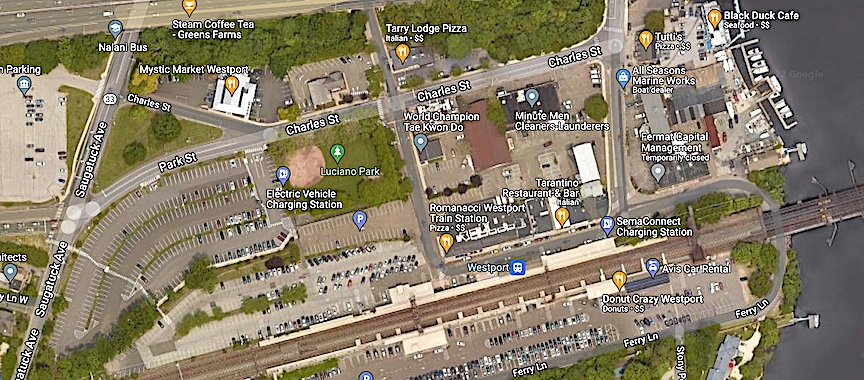
Proposed state legislation — that would permit denser housing development near train stations, with goals of making housing more affordable and providing easier access to transportation — was debated Monday at a General Assembly hearing, which drew critical comments from Westport officials.
House Bill 5429, backed by the advocacy group, Desegregate Connecticut, would require towns to allow housing with at least 15 units per acre within a half-mile of a passenger, commuter rail or bus rapid transit station.
At least 10 percent of the housing units would have to be designated as “affordable” in compliance with state criteria.
The bill, if approved, would take effect Oct. 1. Under the proposal, developers would not be required to undergo the public hearing process to build within the designated areas, and decisions on permit applications must be issued within 65 days of submission.
Westport officials united in opposition
Westport officials were among the local office holders and legislators who spoke against the bill before the legislature’s Planning and Development Committee, saying it would primarily increase density, not affordability.
They also said the bill doesn’t take into account the unique needs of Connecticut’s towns.
Supporters say the legislation, which supports a concept often called “transit-oriented development,” would increase overall housing stock in Connecticut and allow people to easily use public transportation for commutes.
Access to transportation is often particularly challenging for people with lower incomes, many of whom don’t have cars. Public transportation also benefits the environment if fewer people drive, they argue.
Westport First Selectwoman Jennifer Tooker told the committee she believes the bill would have the opposite outcome of its intent in her town.
“The area around the Saugatuck train station is filled with local businesses and shared work space. It is exactly the type of commercial development that our Westport business owners want and need to stay viable,” Tooker said in her testimony.
“This bill would encourage development that would make it difficult for them to remain. Thus damaging the core of our business community.”
Westport, Tooker added, “is serious about diversifying our housing. We have made progress in recent years and are actively working on a strategy through the 830-j process and plan.”
She was joined in opposing the bill by state Rep. Jonathan Steinberg, D-Westport.
He expressed concern about the legislation’s impact on Westport’s train stations, which he said are not in areas suitable for housing development. They’re surrounded by wetlands, near a beach and a school, he said.
Certain types of land are exempt from the law’s requirements, including wetlands, steep slopes and areas necessary for protecting drinking water, among other classifications.
Steinberg said that while he supports more affordable housing development, “this bill is not the way to do it.”
“It ignores the basic facts on the ground,” he told the committee members.
Proponents: Bill would address high housing costs
Rent and house prices have spiked nationwide as demand has outpaced available supply. And in Connecticut, new development for multi-family housing is particularly tough because of restrictive local zoning laws, advocates of the plan contend.
“The more housing that is created, the more affordable it is overall,” said Sara Bronin, founder of Desegregate CT. “It’s a sort of economics argument. That goes both for purchase prices and rental prices.”
Alan Cavagnaro, a college sophomore and a planning and zoning commissioner for South Windsor, spoke in favor of the bill, saying he’d seen graduates forced to leave the state because they couldn’t afford housing in Connecticut.
“Whether it be an affordable place to live, or increased use of public transit, there is more that we can do,” Cavagnaro said in written testimony. “What’s the point of having job opportunities in CT if our state isn’t affordable to live in for the next generation of leaders and innovators?”
Is housing a “right” or a “want?”
His testimony led to an exchange with state Rep. Kimberly Fiorello, a Republican who represents Greenwich and Stamford, about whether housing is a right or a “want.”
Cavagnaro said in response to a question from Fiorello that housing is a right — that it’s a habitat that humans need, and that there are lots of people in Connecticut who are having a hard time finding an affordable place to live. That’s a problem that needs to be addressed, Cavagnaro said.
“Housing is not a right, because housing is built by other people,” Fiorello responded. “It’s a want, and there’s a variety of different housing that people may want. But housing is not a right. You don’t have a right to other people’s labor … People will offer it at a certain price, and you are either willing to pay for it or not.”
Dobin: Wait to see impact of earlier housing legislation
Other officials thought the bill would have a negative impact on their communities.
Danielle Dobin, the chairwoman of Westport’s Planning and Zoning Commission, echoed sentiments brought up last week during a public hearing for another affordable housing bill that legislators should wait to see the effects of a 2017 state law.
Dobin said that towns, including Westport, are already working on their affordable housing development plans required under that legislation.
The law, 8-30j, requires towns to develop affordable housing plans every five years. The first is due in July.
Fred Camillo, Greenwich’s first selectman, said the bill would hurt property values. There are other ways to make it less expensive to live in Connecticut, Camilo argued.
“I would focus on jobs,” he said. “Lower the taxes. Make it easier to live here.”
Karen DuBois-Walton, president of Elm City Communities, which is the housing authority in New Haven, said in written testimony the bill would make it easier to live in Connecticut for many families.
“I’m here to support HB 5429 because, in an era of spiking gas prices and a rapidly warming climate, housing is not affordable if it is not close to affordable transit,” DuBois-Walton wrote.
Supporters of the bill reiterated the urgency of the need for more housing in Connecticut.
“Our current zoning system, with individual towns left to determine how and where to develop such housing if at all, has left us with this housing shortage,” Kiley Gosselin, executive director at the Partnership for Strong Communities, wrote in her testimony. “Our families and our state economy are suffering as a result.”
With additional information by the Westport Journal.













This is the most flagrant abuse of land use that CT will experience….ever.
Short of someone showing up to your home with their guns and forcibly throwing you off your own property, Sara Bronin has manufactured a profit scenario that has the developers ecstatic.
Waging a theme of desegregation to wallpaper over and diminish our unique history, to attempt to eliminate the moral and ethical values that serves as the foundation for 169 CT municipalities is to clearly announce your dangerous intentions.
Never mind national or international events, this is a critical time to focus on the life changing dangers to State of Connecticut residents and property owners
We value democracy, freedom of choice and market economics. State mandated laws that change those values, and individual choice, are not right for our state, or America. There are ways to promote and encourage affordable housing, and that is good. ……Let’s find ways that work. But having traveled America a lot – 10 states – the last 5 months, I assure you all, there is plenty of affordable housing in America. Our nation’s creators did not think that it only had to be in Fairfield County!
Agree with Carolanne. Just when you think politically extreme advocacy groups, predatory builders and left wing legislators could not get more greedy, absurd and outrageous – they do!!