
By Gretchen Webster
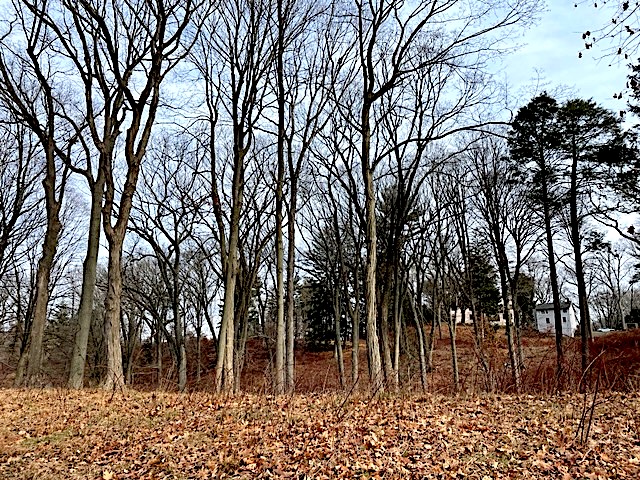
WESTPORT — Trees and how best to protect them is a growing community concern.
The Planning and Zoning Commission, as it begins reviewing ways to address that concern, faces the challenge of striking a balance between preserving trees and protecting the rights of property owners.
Proposed zoning changes have been introduced that could require homeowners, developers — basically anyone — to obtain a permit before a mature tree can be removed from their property.
Some Westporters are passionate about saving trees and believe that requiring a permit for cutting down trees will help slow the loss of mature trees around town.
While others say that having to submit to a Planning and Zoning Department permit process just to cut down a tree in their yard would violate their personal rights.
The P&Z’s Zoning Regulation Revision Subcommittee on Wednesday met for its initial discussion on the draft amendment for tree protection.
A “tug-of-war”
Danielle Dobin, the P&Z chairwoman, assured the virtual audience of about 50 people the amendment would exempt trees that posed a safety hazard, allowing them to be taken down immediately without a permit.
Dobin characterized the discussion as a tug-of-war “between personal property rights and the community good.”
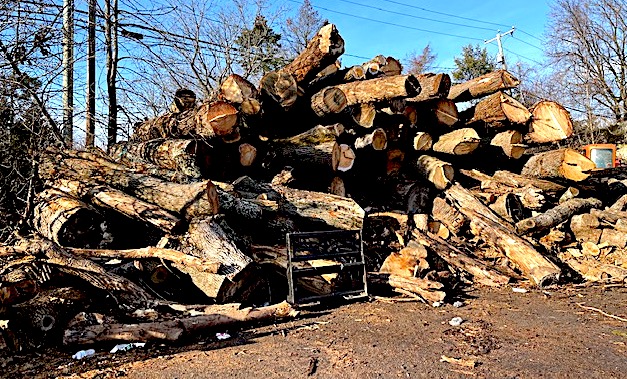
Cutting down trees reduces the town’s tree canopy, adversely affecting animals and the ecosystem, she said.
But personal rights must also be considered, she said. “There’s not really a right answer — just a lot of interpretations.”
Aesthetics at issue: Trees vs. lawns
Among those commenting on the permit proposal were developers, including Robert Haroun, who said the tree-cutting permit process would have “unintended consequences.”
He called the proposal “an attempt to regulate aesthetics. People like trees, but people also like open, rolling lawns,” he said.
The regulation would be a problem for smaller property owners, who would be prevented from adding a deck, pool or addition to their home if a tree is in the way, Haroun said. “I’m not in favor of any tree regulations beyond the current wetlands regulations … this is going to affect small property owners more,” he said.
Broad impact of cutting down trees
But Representative Town Meeting member Wendy Batteau, District 8, the chairwoman of that body’s Environment Committee, said she supports the regulation and permit process for removing trees.
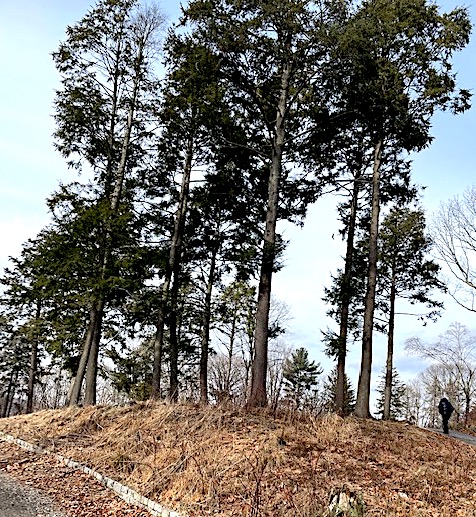
According to Batteau, studies have shown that planting trees and using more solar power are the two best ways to help the environment. “Right now, we are losing trees, not just as canopy or anchors for the land, but as animal habitat,” she said.
Monica Buesser, chairwoman of the town’s Tree Board, said that panel is very concerned about developers clear-cutting trees around Westport. Instituting a permit process for cutting down trees would force developers to “know that in this town, you can’t cut trees without a permit,” she said.
On small lots, if a tree was removed but couldn’t be replaced at the same location, the homeowner or developer could be required to be plant new trees at another approved location in town. “You would still be keeping the canopy in town,” Buesser said.
The draft text amendment, as described at the meeting by town planner Michael Kiselak, would require permits for removal of mature trees with a trunk diameter of at least 12 inches, while cutting down trees in property setbacks would be restricted even more.
Cut down a tree, plant a new one
And trees that are removed, even with a permit, would have to be replaced with new trees that are a native, non-invasive species.
Other specifies in the proposal include requiring pruning, trimming and repairs to mature trees to meet certain standards, and to be sure that site plans for new development includes information about trees being removed or planted on the site.
Tree Warden Ben Sykas said that maintaining a diverse species of trees in town is also important. “With the number of novel insects and diseases we are encountering, we need to have the diversity when the next thing comes along,” he said. “We have to hedge our bets against novel diseases and trees that don’t survive.”
Although the P&Z subcommittee agreed to pass the draft amendment on to the full Planning and Zoning Commission eventually, town staff first needs to conduct more research, consider comments from the community and will circulate another draft of the proposed amendment, Dobin said.



I applaud the efforts of our P&Z Commission under the leadership of Chair Dobin to try to bring balance to this issue. Once again, RTM Member Wendy Batteau reflects the views of so many who want to preserve trees and recognize the benefits of preservation. I also suggest that people refer to the interests of property owners in deciding what to do with a tree not be characterized as a “property right”. Rather, a more accurate phrase probably would be property “interests” since, fundamentally, when it comes to real estate those interests being referred to as “rights” simply reflect legislative judgments in our Federal, State and local laws and ordinances. Both the “common good” and the uses of land embody legitimate interests.
I applaud this effort of the P & Z .. thank you for caring enough to connect the dots P&Z !!!
and have wanted to see this being addressed for years. The January/February SMITHSONIAN MAGAZINE has a fascinating cover story of how important our older trees are to the survival of the planet. An older tree recycles so much more CO2 than younger trees that planting younger trees is not the answer Please read the Cover story THE OLDEST TREE – the discovery of ancestral U.S Forests and their vital role in our future.
We have so much to learn and keeping older trees is so beneficial to the need we have for slowing down CLIMATE CHANGE we need to make these mental connections before it is too late
The cut a tree plant at tree concept is a good start, but will still require staff oversight, honest detailed plans, tree warden review and recommendation, etc. etc. etc.
Here’s a thought –what about using a quid pro quo concept that involves the contractor/developer to receive some kind benefit for each tree saved. Drafted correctly, a rule like this could almost be completely self-enforcing.
Good incentives can balance the needs of the community with the needs of the contractor/developer.