
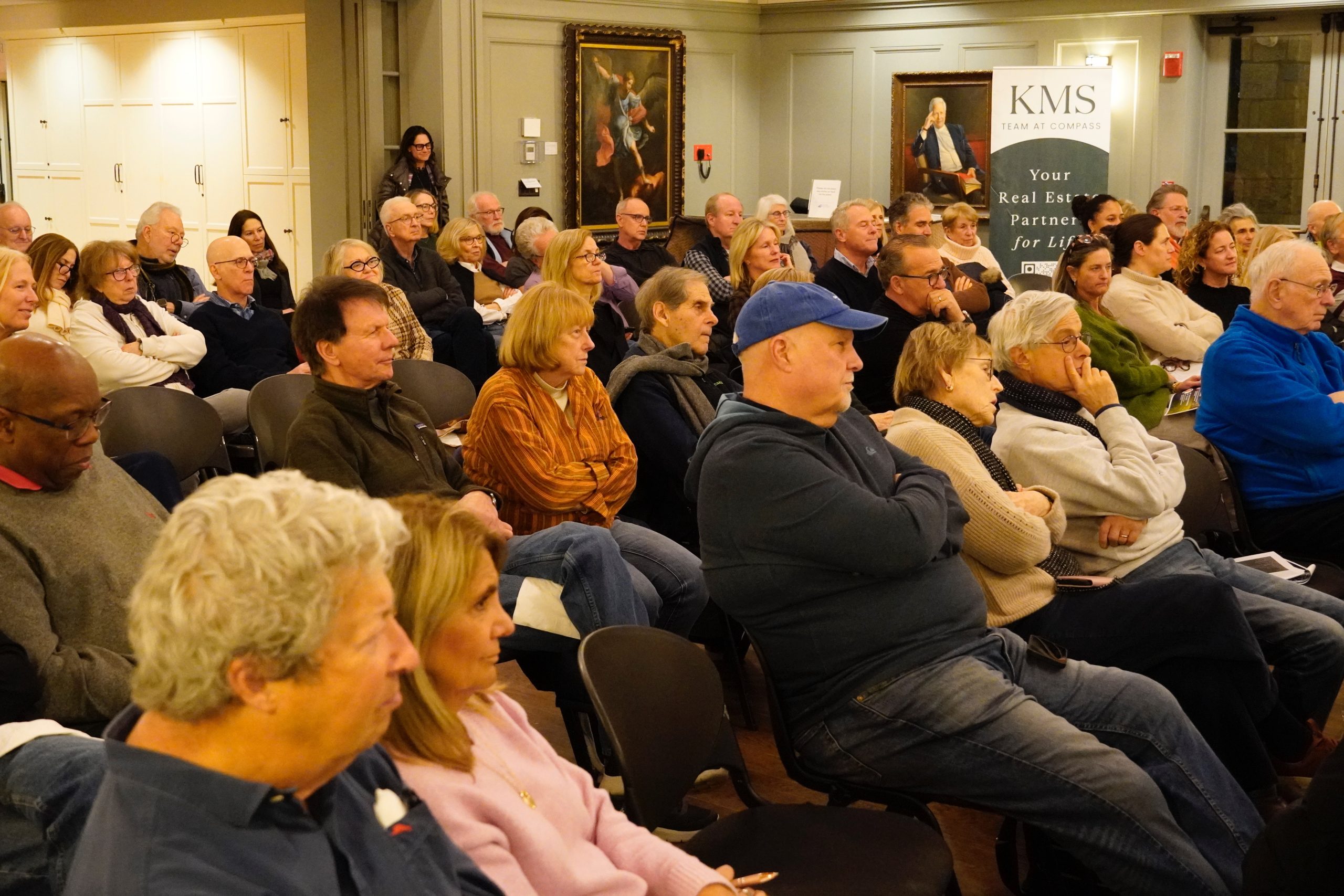
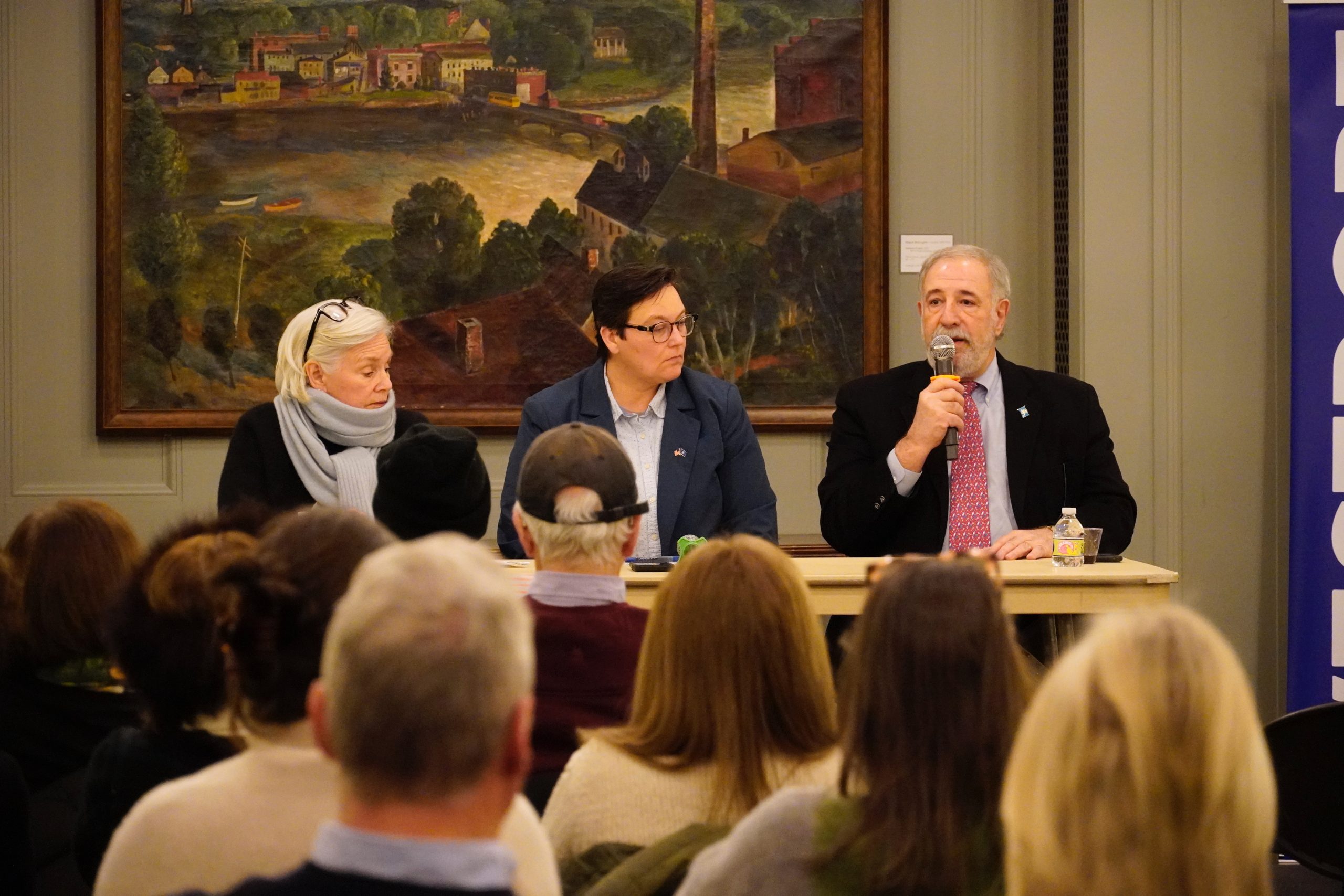
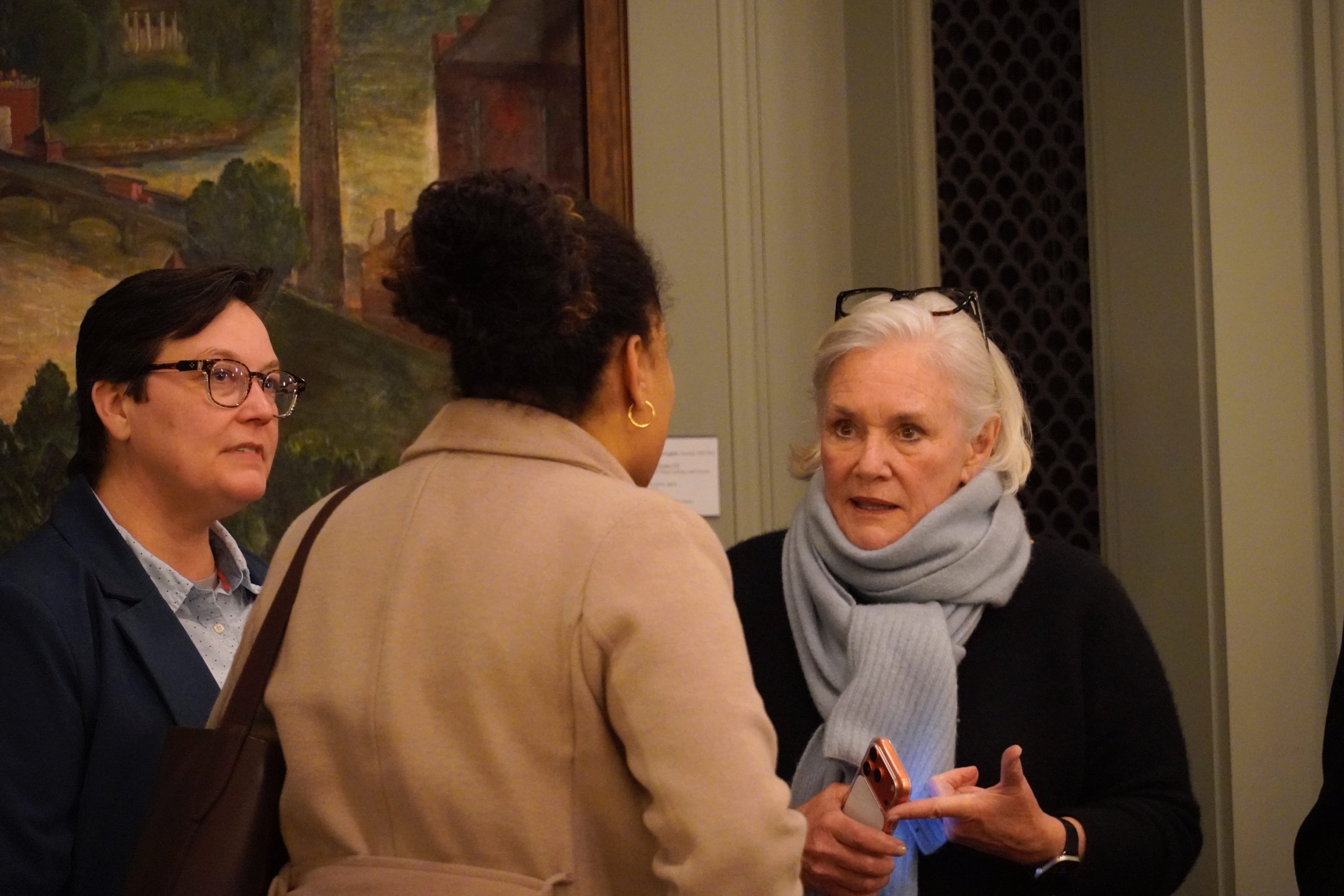
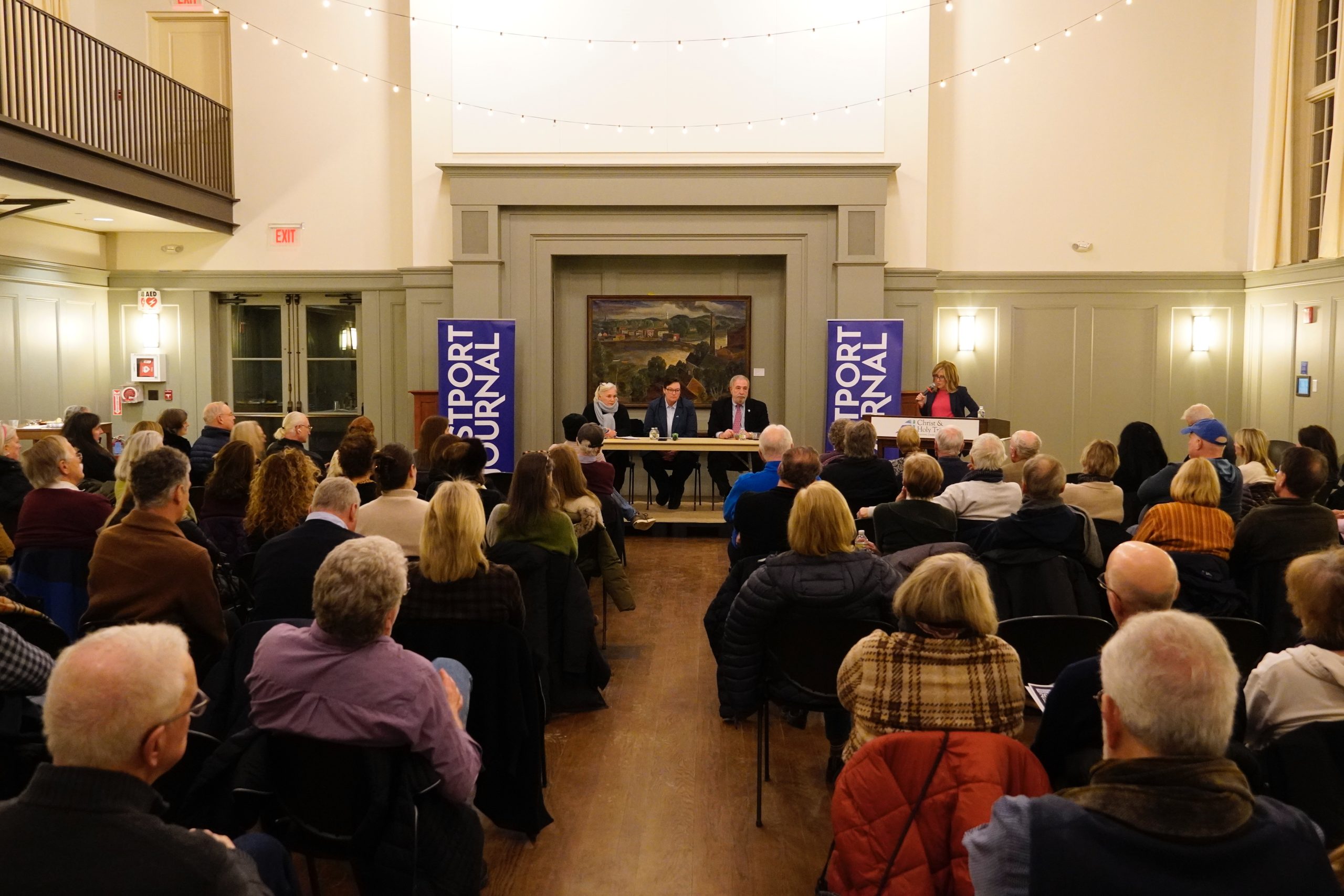

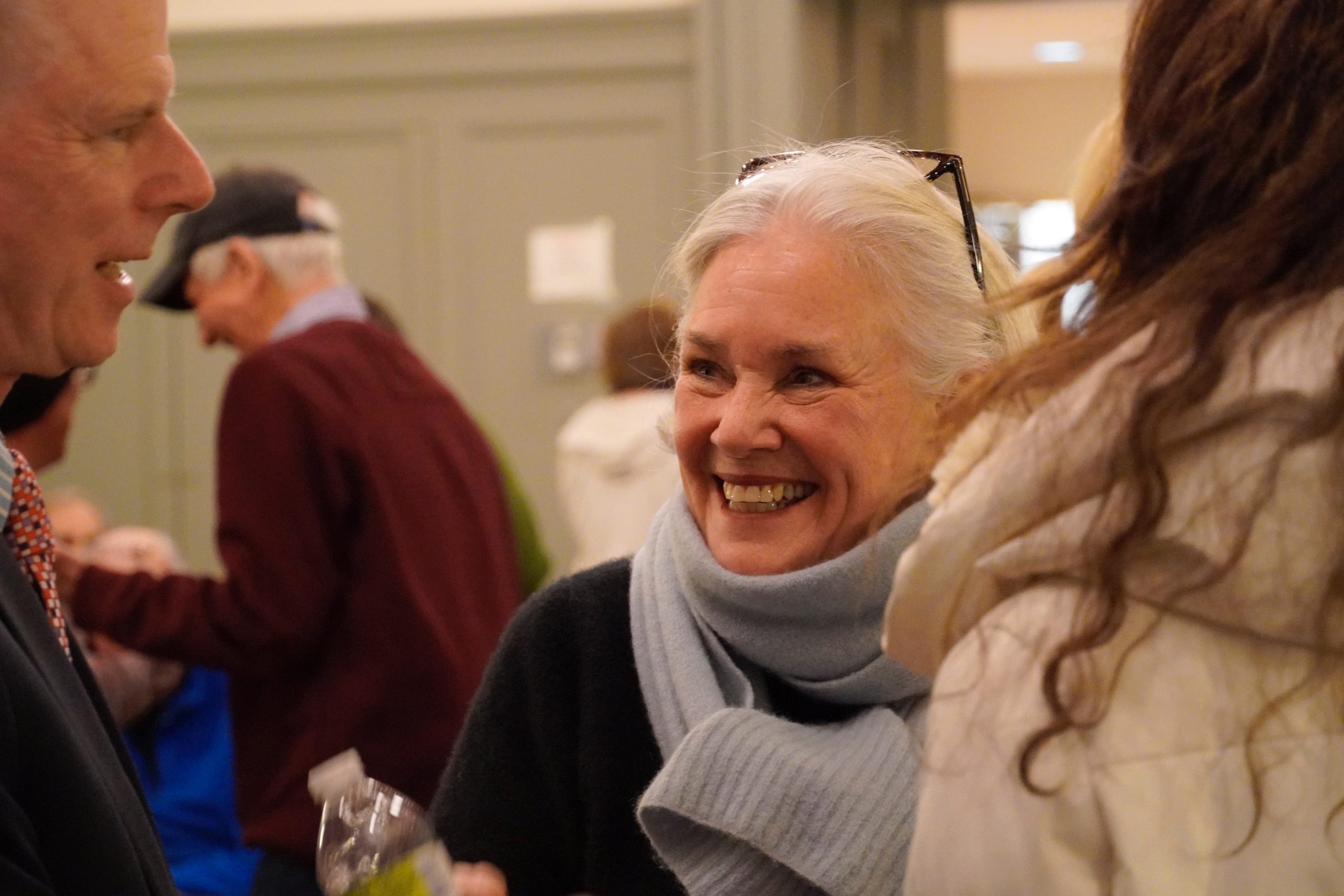
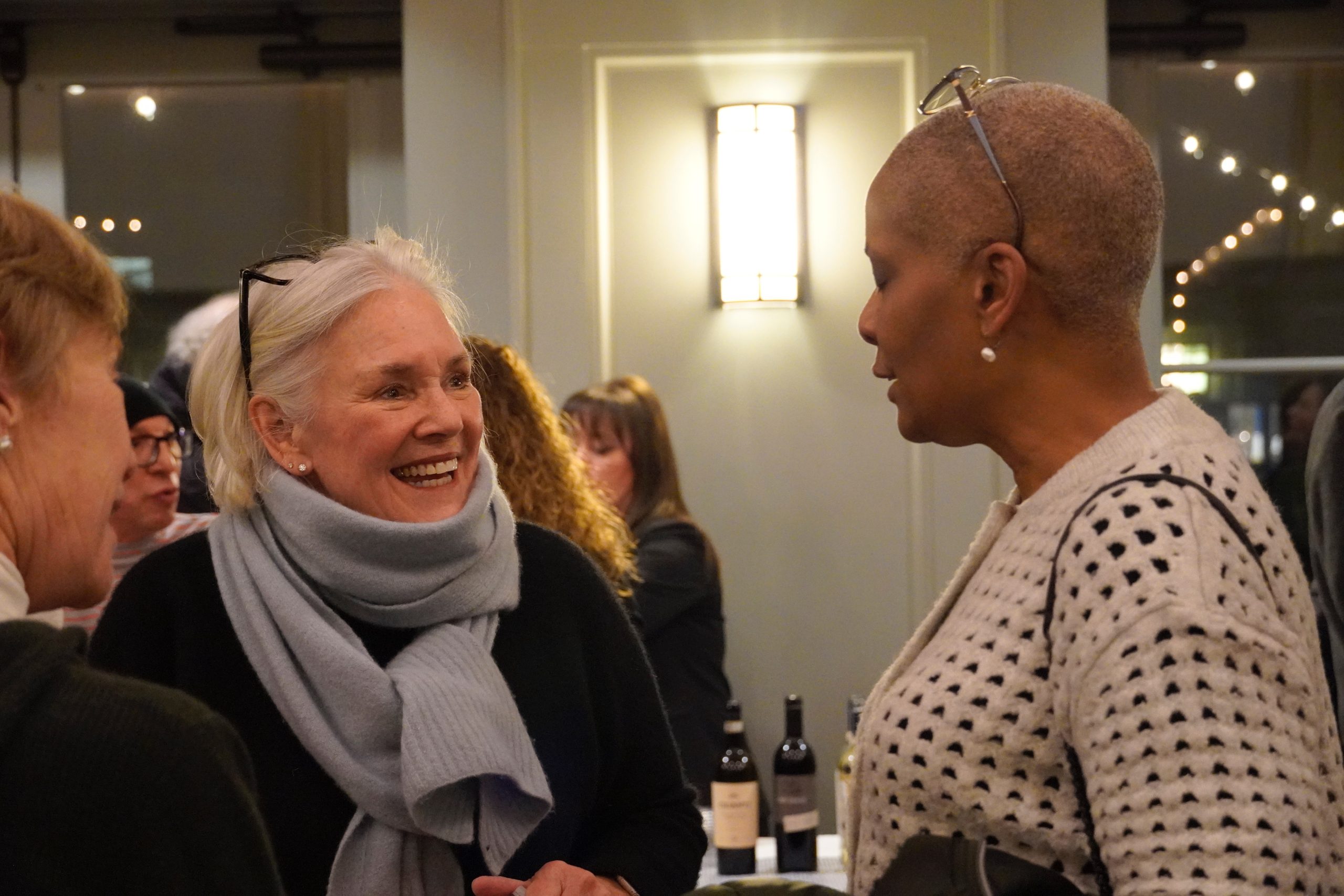
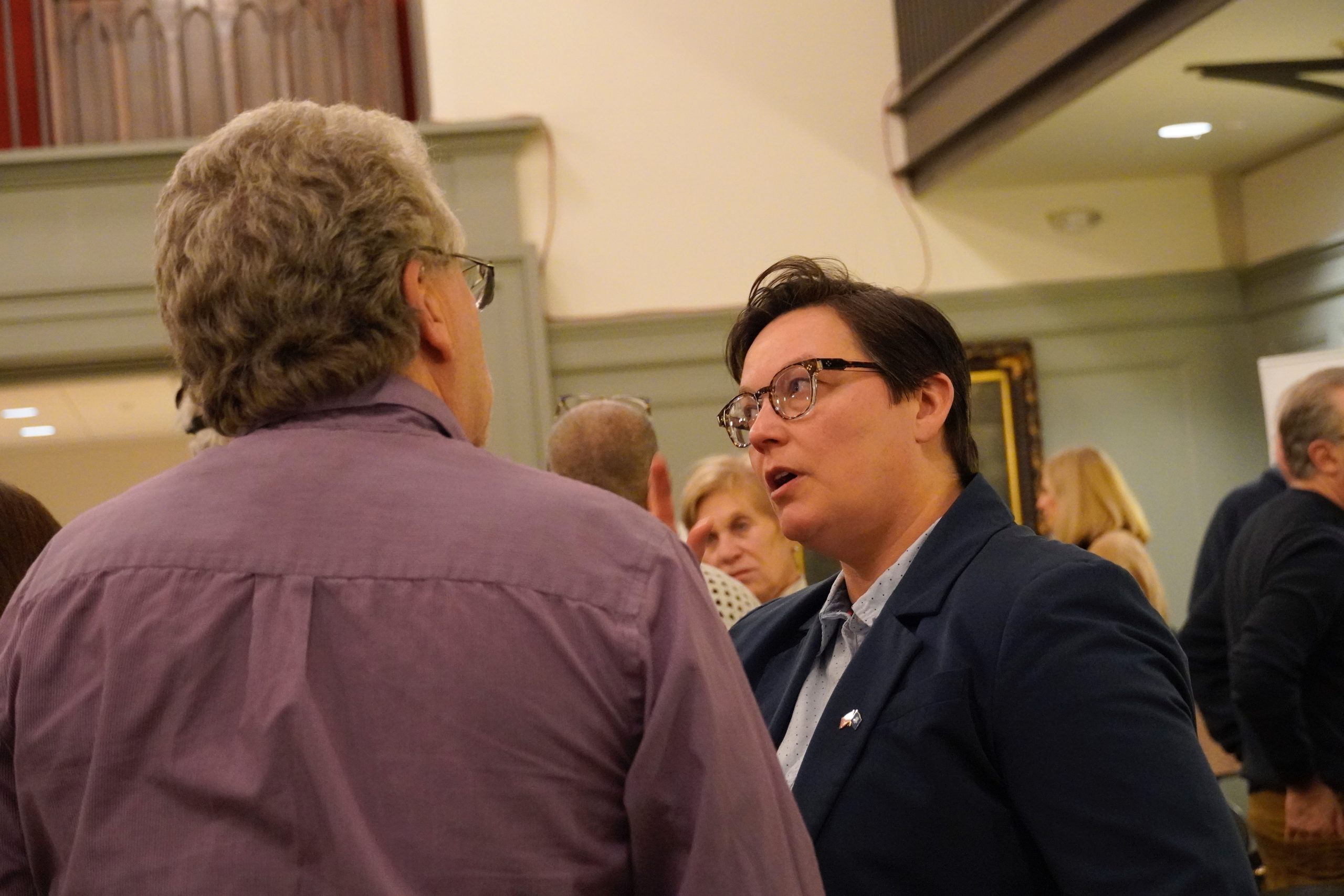
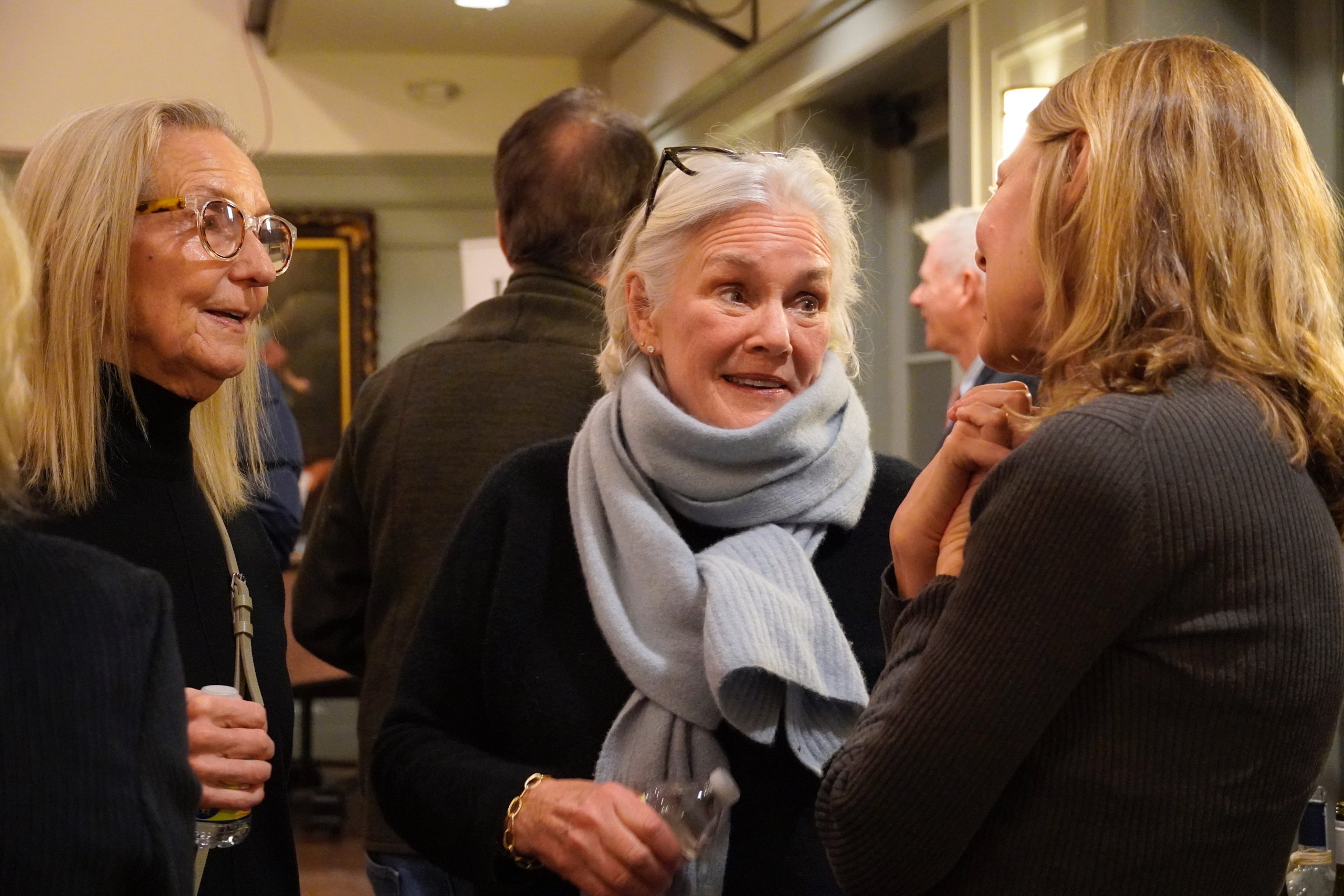
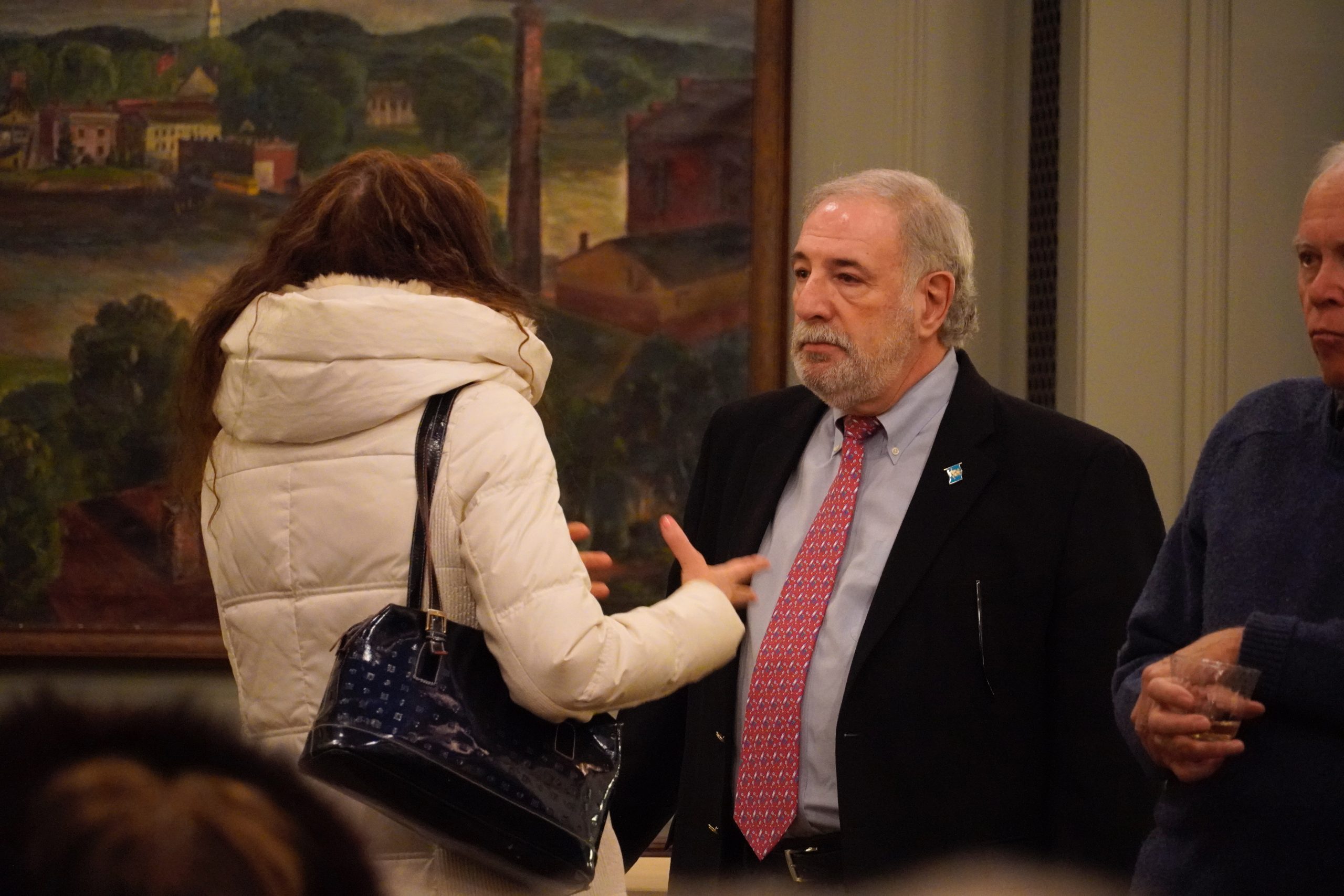
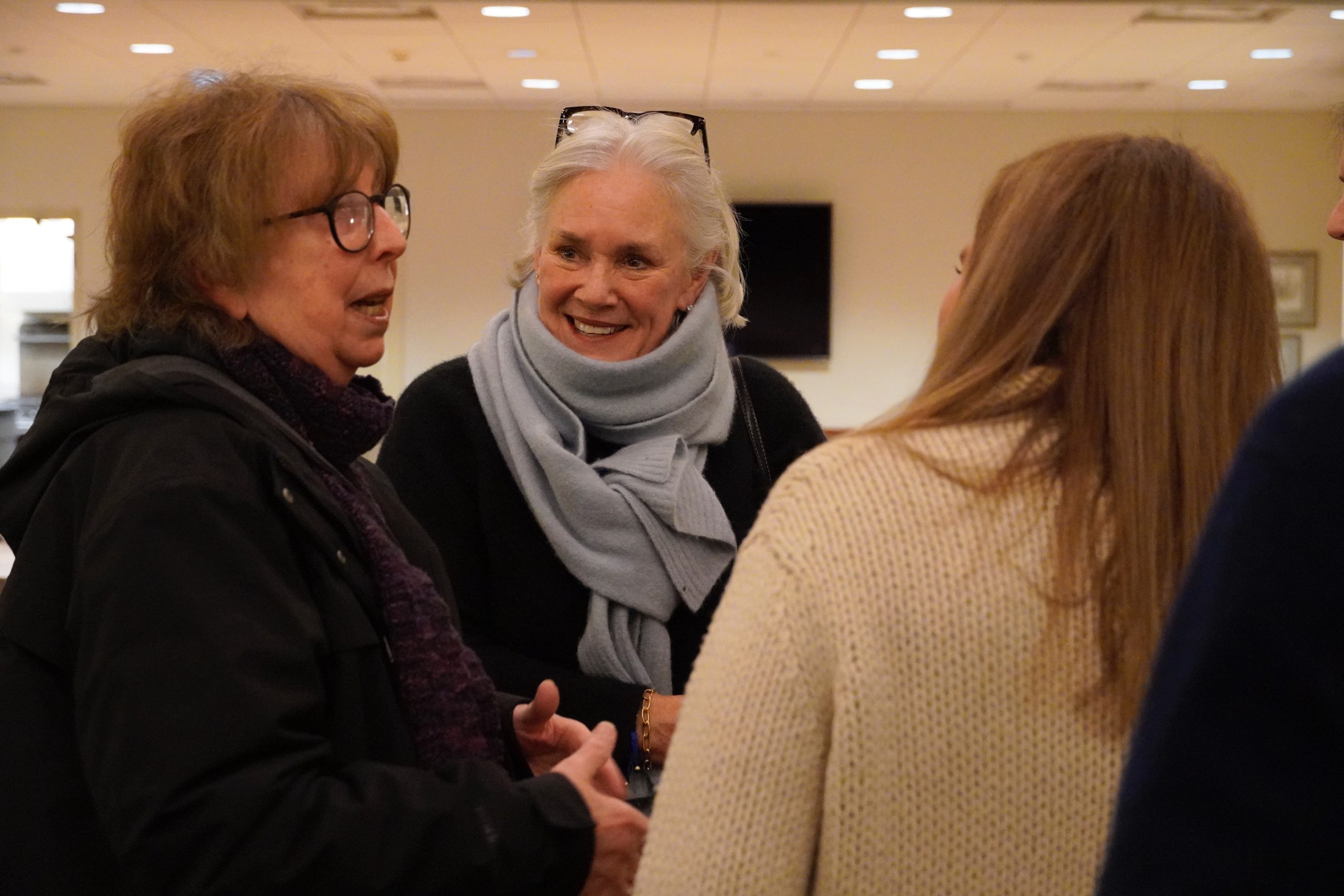
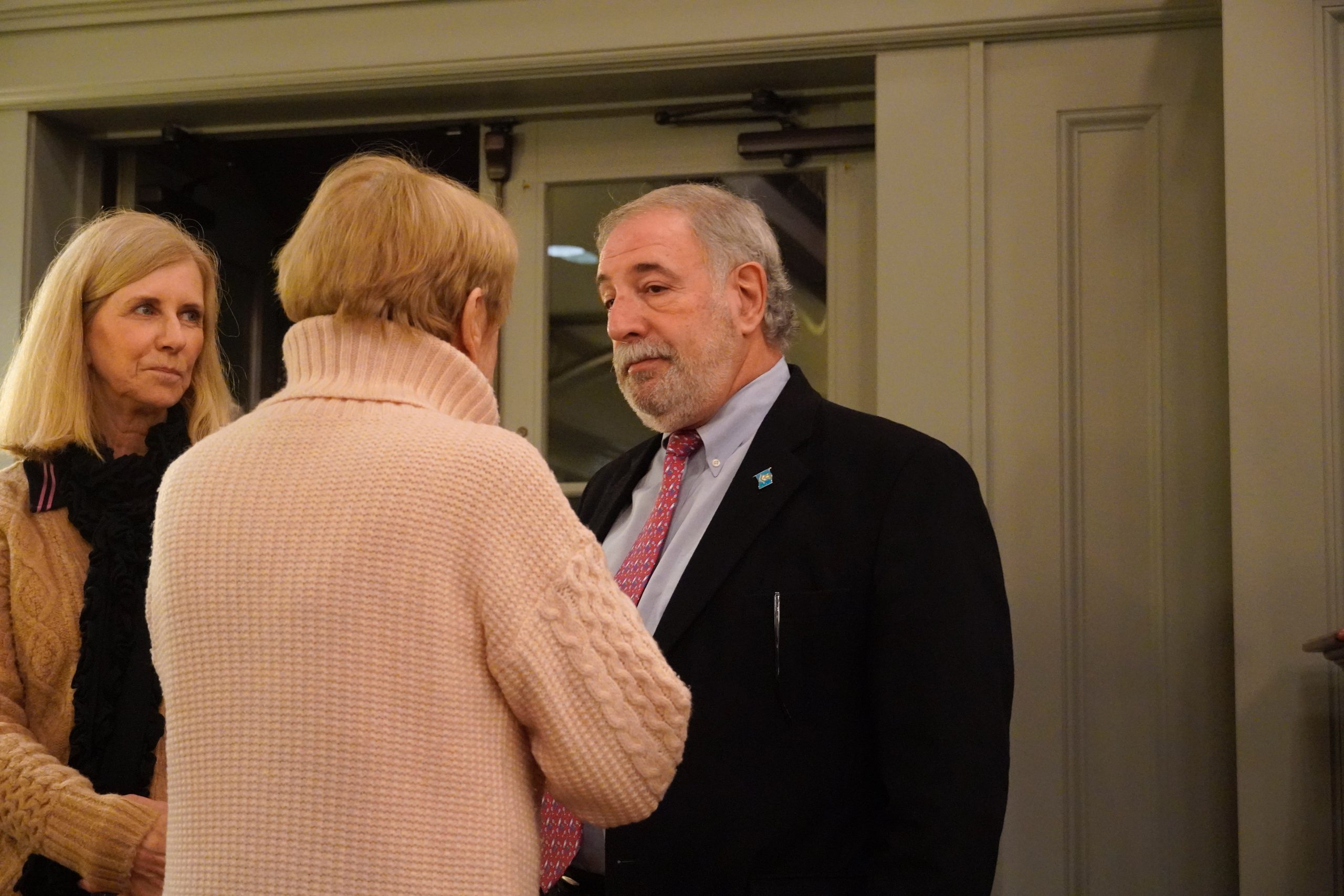
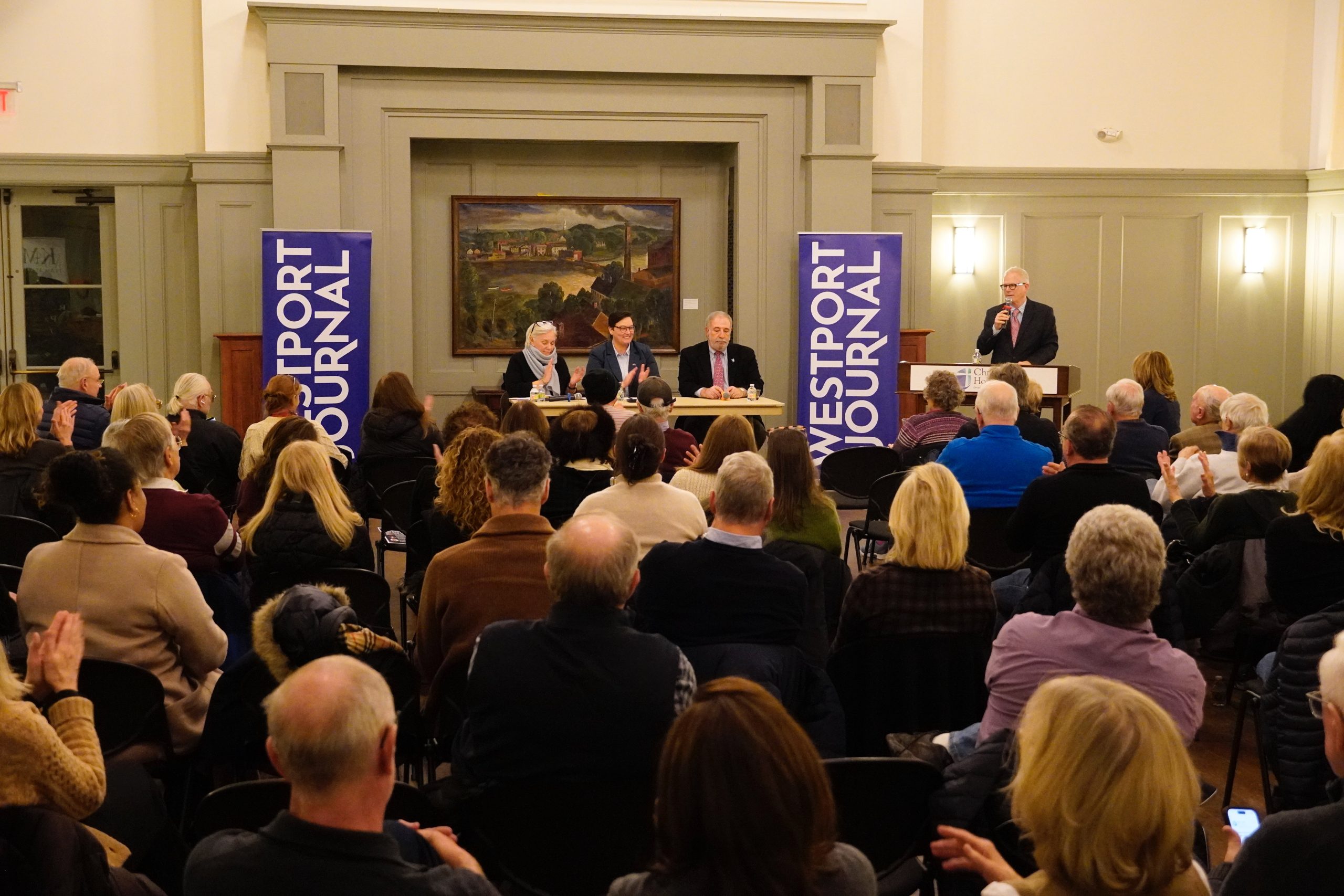
WESTPORT–Westport Journal readers met with the town’s three Hartford representatives Tuesday for a discussion of affordable housing, traffic, energy and other other issues that impact the local community.
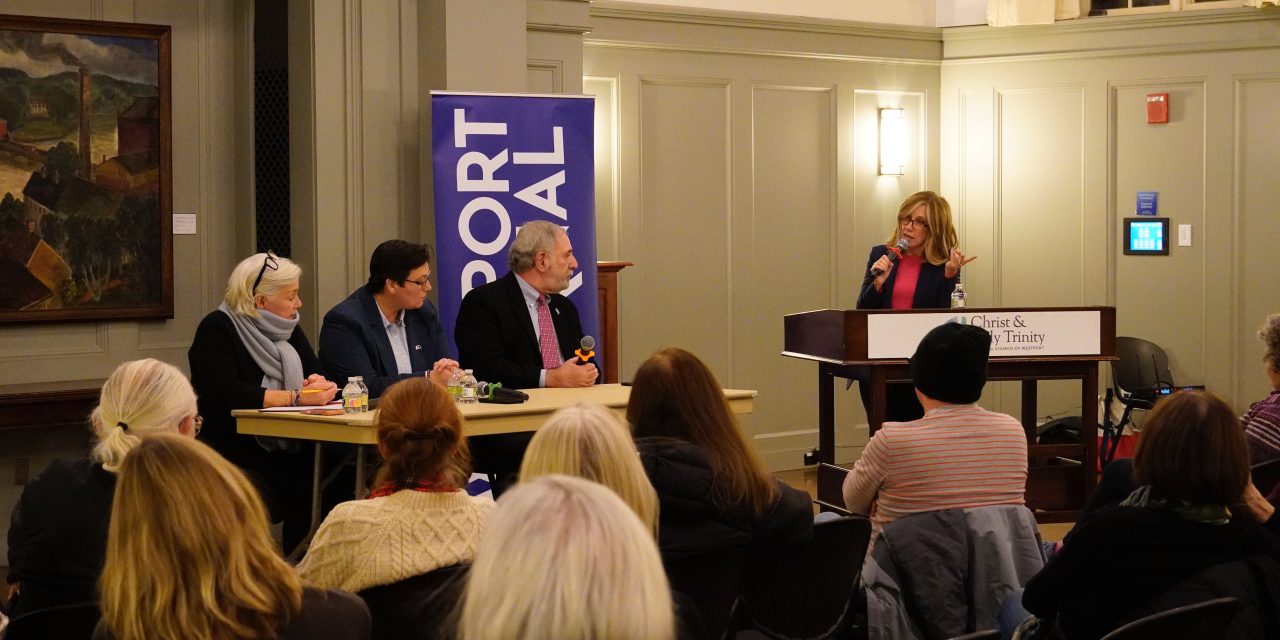
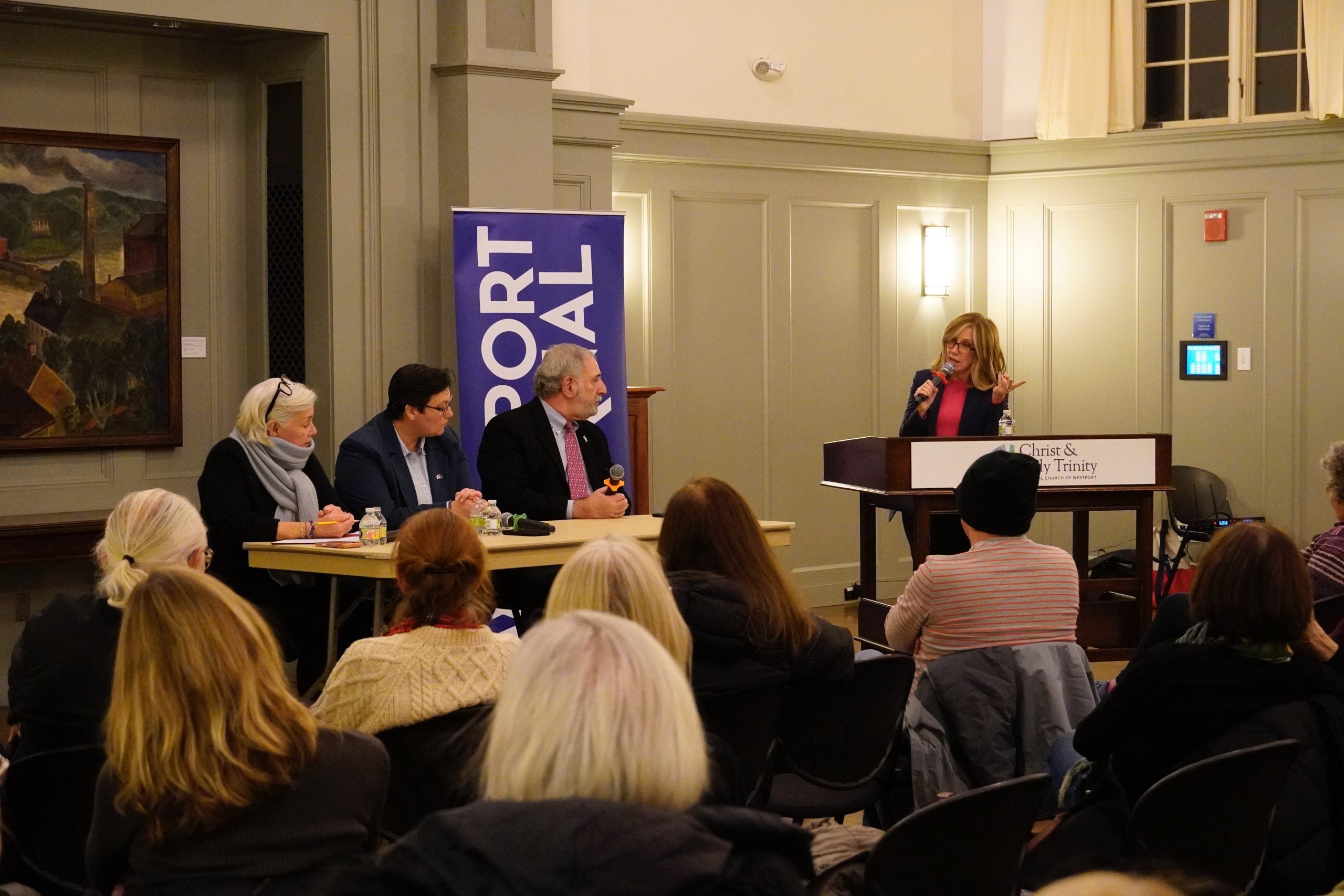
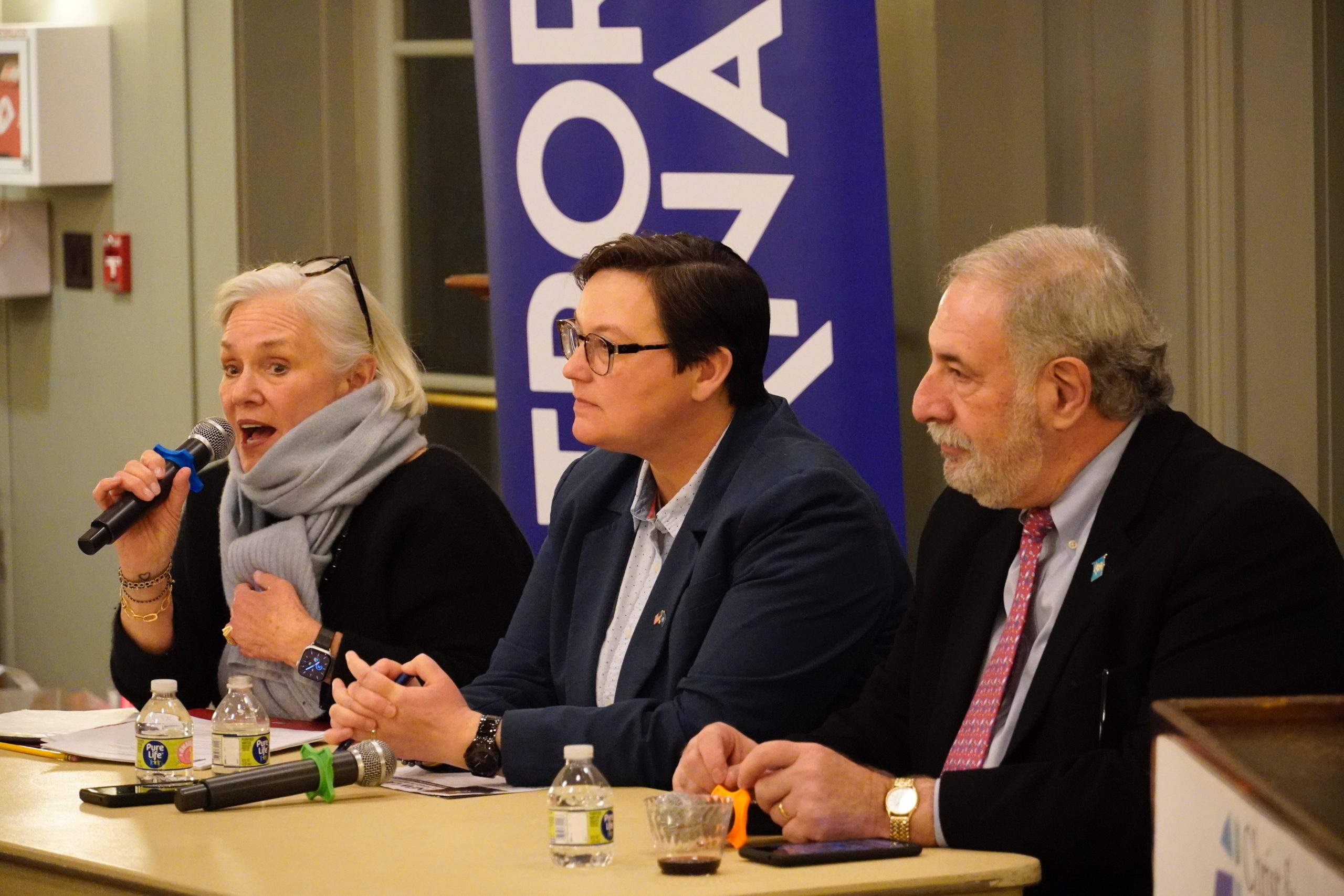
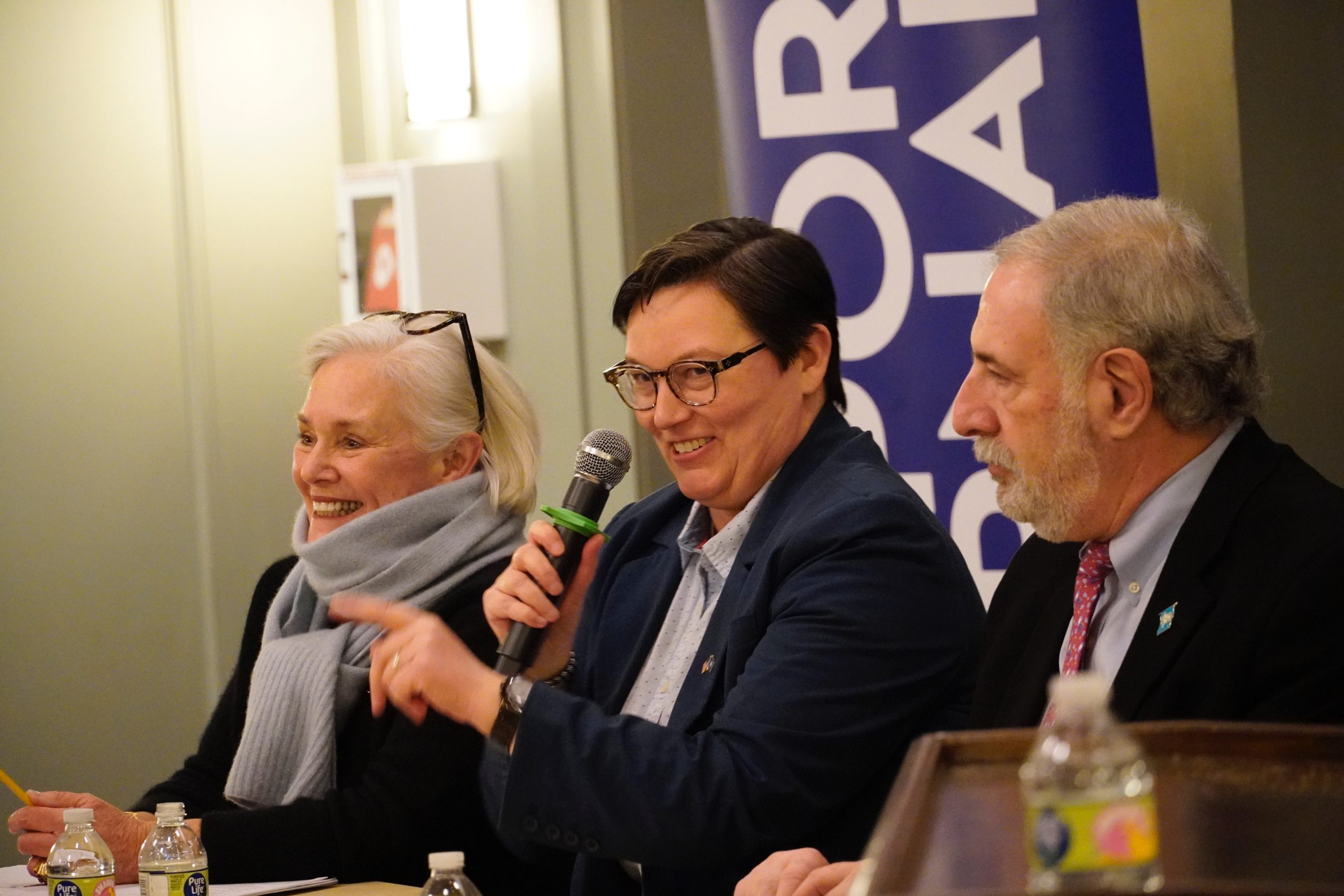
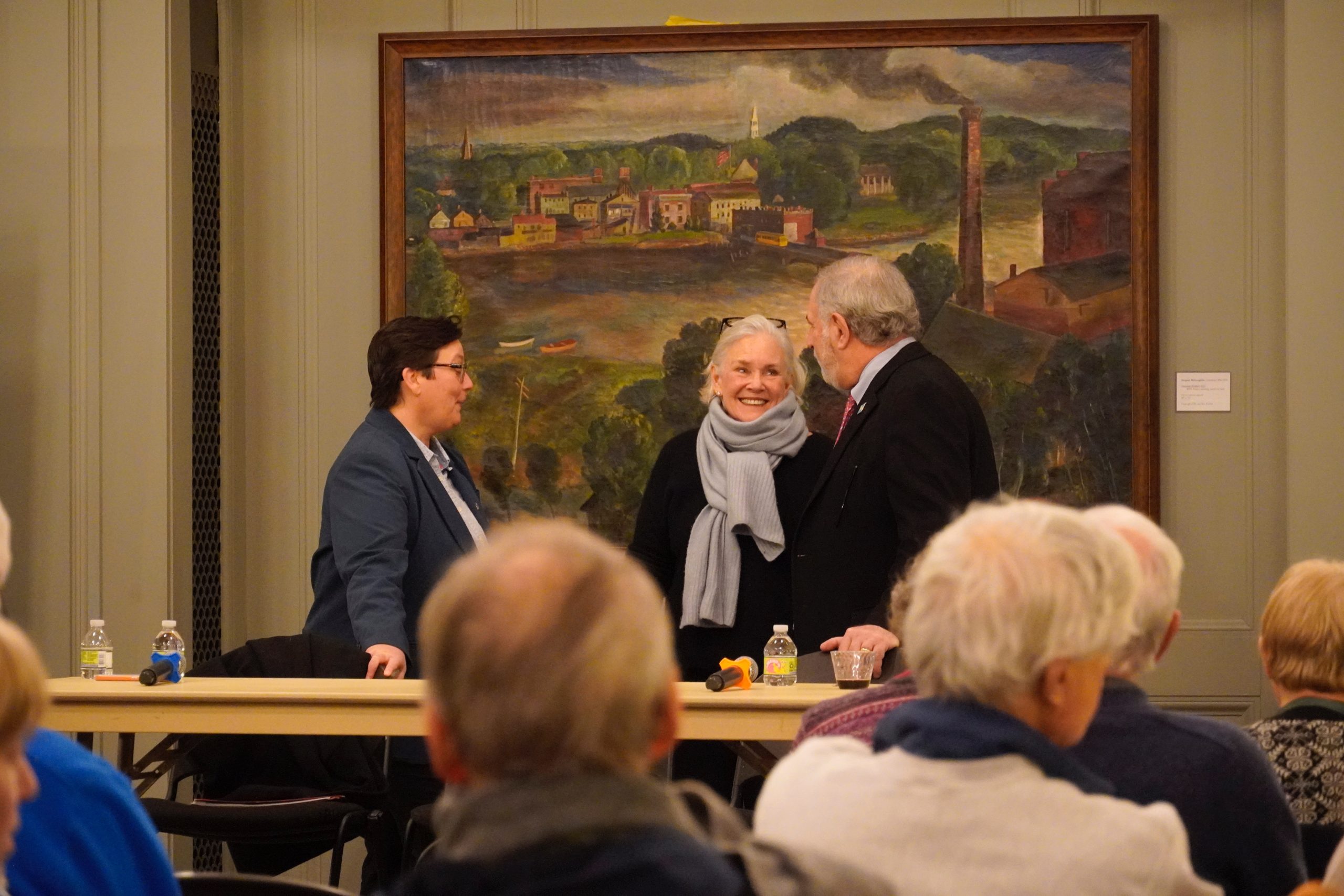
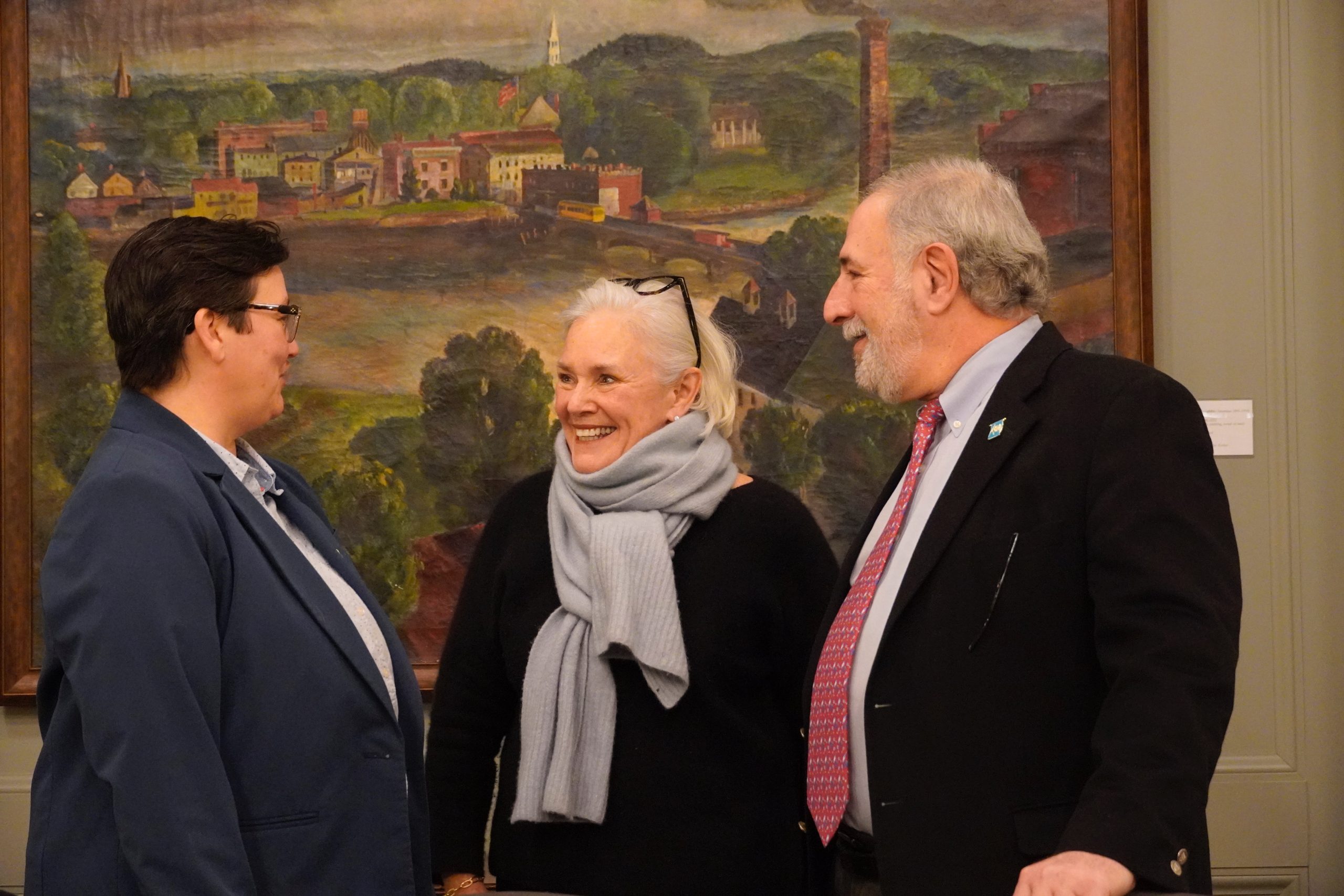
Rising energy costs, the state’s new housing law, and the fate of the Cribari Bridge were among the topics addressed by state Senator Ceci Maher and state Representatives Jonathan Steinberg and Dominique Johnson in the Westport Journal’s “Libations and Legislation” event. National broadcast journalist and Westporter Alisyn Camerota moderated the discussion, held in Christ and Holy Trinity Church downtown.
Energy
Steinberg, who chairs the House Energy and Technology committee, addressed rising energy costs by noting that he is a long-time supporter of nuclear power. He said most Westporters don’t seem to realize that a big chunk of the electricity consumed by Connecticuters is produced by the Millstone Power Station, a nuclear reactor in Waterford, Connecticut. Steinberg saw hope in a rising technology, Small Modular Reactors (SMRs), which are nuclear fission plants that generate about a third of the energy of traditional nuclear energy facilities. SMRs are designed to be assembled from factory-produced systems and components, creating a more affordable and flexible energy solution for producing safe, carbon-free electricity.
When asked about the Revolution Wind project, Steinberg commended Connecticut Attorney General William Tong with swatting away the two stop-work orders imposed on the project by the feds. Revolution Wind is the almost-completed wind power project located in federal waters between Block Island and Martha’s Vineyard. Once it is online, scheduled for later this year, it will provide power to 300,000 homes in Rhode Island and Connecticut.
Election integrity
Camerota asked Johnson, a House Government Administration and Elections Committee member, about the FBI’s seizure of Fulton County, Georgia, ballots and records from the 2020 election and how Hartford can ensure that future votes in Connecticut are held fairly.
Johnson said, “The U.S. Constitution gives states the responsibility for our elections, and we take that duty incredibly seriously. We are continuing our work to maintain data privacy, election integrity in collaboration with SOTS and especially our local Registrars, and implementing no-excuse absentee voting which voters overwhelmingly approved at the ballot box in 2024.”
ICE and Border Patrol
Johnson also said that there were four days of ICE raids in Norwalk in August, in which 65 people were arrested – most having no criminal records. As Connecticut is a blue state, she said she would not be surprised by any future activity from Border Control and ICE agents in Connecticut.
Maher, who sits on the joint Judiciary Committee, also discussed possible ICE and Border Patrol activity in Connecticut. She said she expected that Connecticut police would follow the state Trust Act, which places restrictions on local law enforcement cooperation with federal immigration officials.
Affordable housing
A discussion on affordable housing centered on the bill HB 8002, which became law at the beginning of the year to encourage more housing, including affordable housing and transit-oriented development.
Steinberg said that Westport has been leading the way in affordable housing and that he is optimistic that the new law, created with much “discussion and compromise,” will produce even more housing.
Steinberg also said that the new law shifts the responsibility for planning and building affordable housing from each municipality to regional Councils of Governments or COGs. Westport will work within its COG to develop a plan in concert with surrounding towns. Hartford will grant tax breaks and help fund new infrastructure, particularly schools, to the towns that construct the housing under the new law.
Cribari Bridge
Camerota mentioned a petition signed by more than 700 people demanding more federal oversight of the state’s plans to bring the Cribari Bridge up to federal code. Steinberg vehemently rejected the notion that the state has not been transparent regarding the bridge. Maher said that if the bridge deteriorated enough to force an unexpected closure, the disaster wrought on all of Westport would be unimaginable.
Regulatory streamlining
A reader had written in to ask how our lawmakers could reduce the regulatory redundancy between state and municipal agencies. Maher said the legislature regularly reviews state and local regs to find areas that can be streamlined.
Representative Johnson said, “Some important ideas to help our small businesses better navigate bureaucracy and reduce red tape are being proposed, like the work in coalition with pro-small business groups including CBIA to give direct relief to our family businesses and make a real difference for them – like restoring the pass-through entity tax credit.”
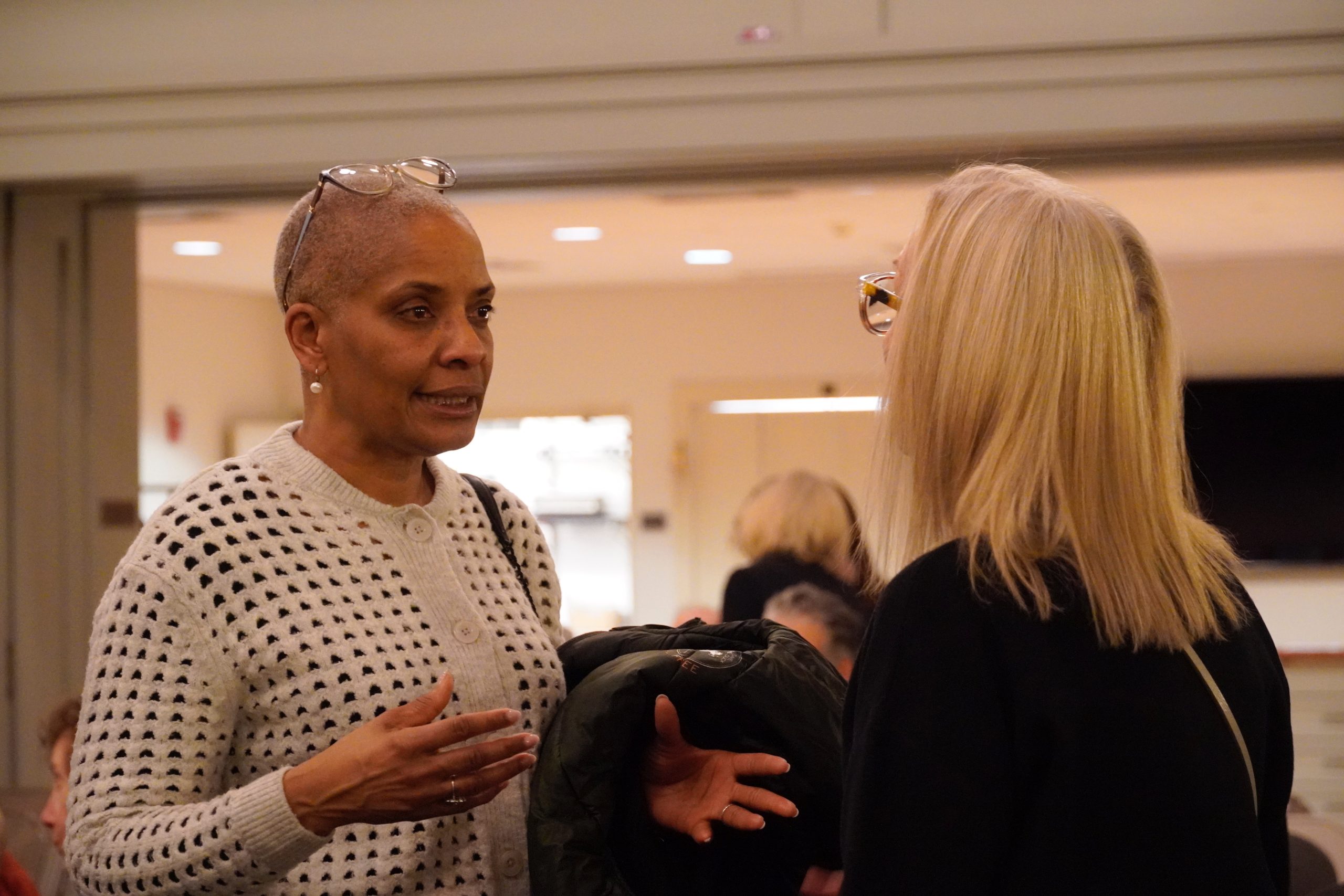
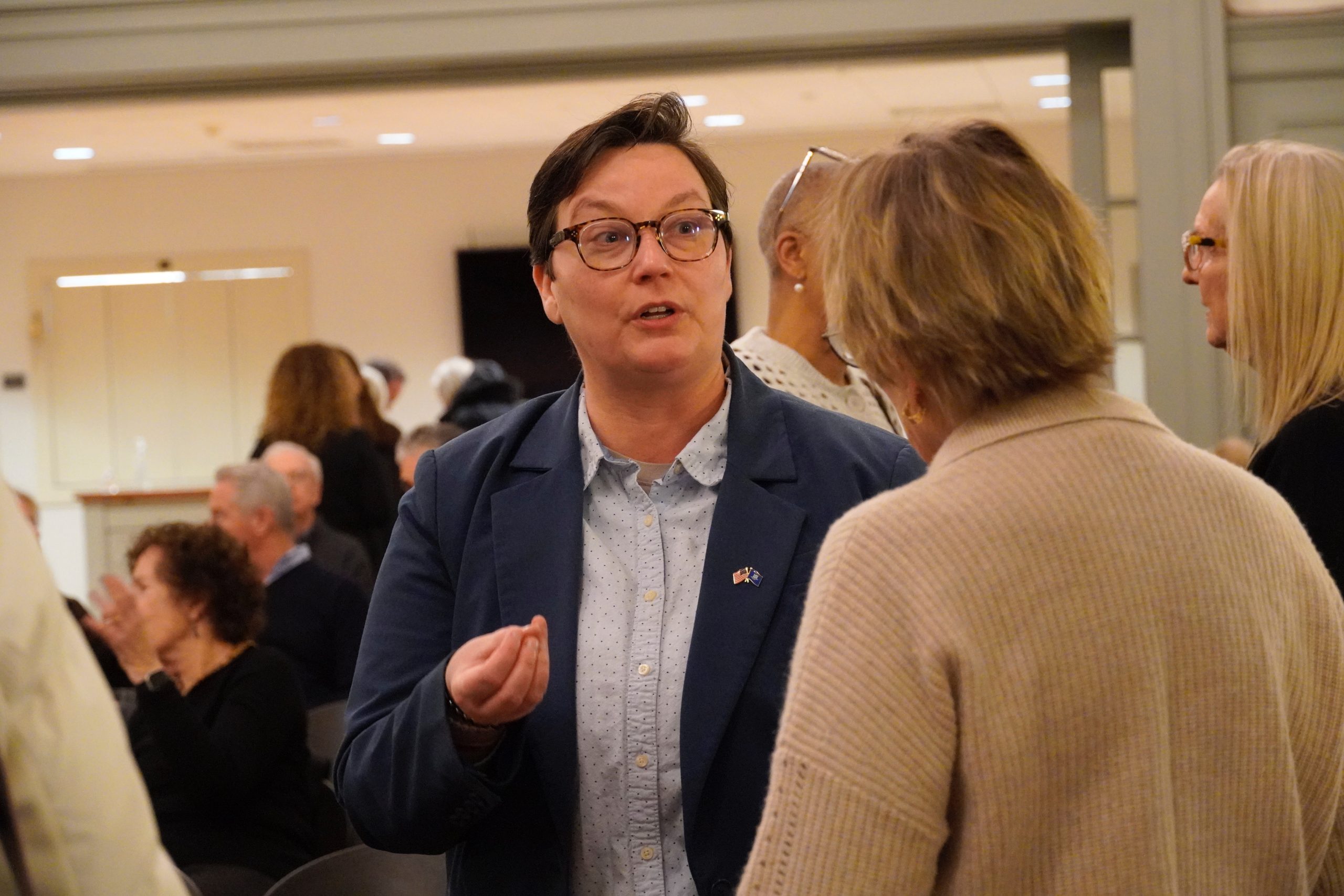
Readers in attendance posed questions about traffic, the Cribari Bridge and proposed social media restrictions for minors.
Saugatuck traffic
Imperial Avenue resident Sam Levenson said his neighborhood is plagued with traffic, even without the Hamlet and other developments proposed for the Hiawatha Lane and without a new or renovated Cribari Bridge that could accommodate more vehicles. A new bridge that adds more traffic, he argued, could decrease property values, which could be seen as a “taking” from neighborhood homeowners. He asked the panel how the state and town could coordinate on a holistic approach to addressing the bridge issue that preserves the quality of life for residents throughout Saugatuck and beyond.
Steinberg and Maher disagreed on what would happen if the Town of Westport wanted to take control of the bridge from the state. Steinberg said the state would repair the bridge and then cede control–and further costs–to Westport. Maher said the state would not repair the bridge if Westport wanted to control it. Westport would pay for the work, and all future bridge-related expenses.
The panel did seem to agree with Steinberg that Westport citizens and government need to engage more proactively with the state to get the best outcome for the town.
Town traffic
Thad Eidman, a Kings Highway N resident, asked for the panel’s thoughts on ideas for easing traffic. The panel expressed support for the idea that the school district should insist that kids take buses to school. They seemed intrigued about the Leonia, N.J., attempt to bar non-residents from side streets near the George Washington Brige during rush hour – an approach that has been shot down in New Jersey state courts.
Children and social media
Cybersecurity expert Sam Disraelly, of Easton Road, asked if the social media measures proposed by a bill introduced by Governor Ned Lamont and Attorney General William Tong were half measures that should go further.
“In a world where our children cannot drive cars until they are 16 … where they cannot vote until 18, where they cannot buy alcohol, they cannot buy a cigarette, they cannot step foot in a casino because of the dangerous, harmful, addictive effects on their still-forming brains… Why, with all we have learned about the addictive, brain altering effects of screen time and social media, are we not protecting our children the same way and banning (social media) outright for kids under 16?” he asked.
Johnson replied that, even though she supports the Lamont /Tong bill, she felt it was not sufficient and that she would continue to do more.
Stay tuned
This event was part of Westport Journal LIVE, a series of in-person events hosted by Westport Journal and sponsored by the KMS Team at Compass. Upcoming events in the series include a town hall meeting with U.S. Representative Jim Himes on April 6 and a fall cultural preview on September 8.











Recent Comments