

By Kerri Williams
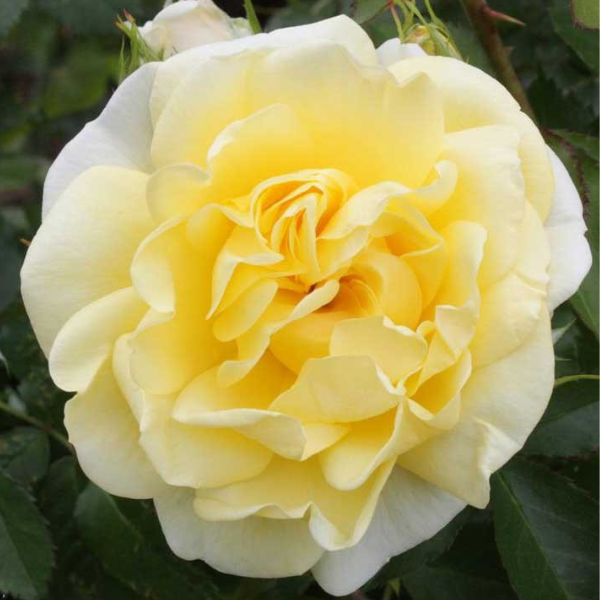
There is so much to love about roses. Besides being beautiful, they have more than 20 different fragrances, come in many colors, and bloom more than once during the same season. They also come in all different sizes, from the miniature ones that grow inches high to the large climbers that reach 12-15 feet.
It’s no wonder that Angelina and Mike Chute have dedicated so much time studying and growing them as well as writing two books on the topic. They also own a business consulting on roses, and have created a blog, The Rose Journal.
The Rhode Island couple, who wrote “Roses for New England: A Guide to Sustainable Rose Gardening,” took some time recently to answer some of my questions about a flower that is a favorite of so many people. The rose is so popular that in 1987, it was named our national flower under President Reagan.
Although they are beloved, the rose has a reputation for being a little tricky to grow. That doesn’t have to be the case, according to Paul Rossi, a UConn master gardener who lives in Westport and is on the board of Wakeman Town Farm.
Rossi says that much of the reputation for roses being difficult comes from the hybrid tea rose, which requires regular feeding and spraying. But other types, including shrub roses and other landscape varieties, will grow with almost no help for years after they settle in.
Rossi recommends shrub roses for those just starting out. The David Austin English rose, which is the name of the breeder and brand for a group of roses, is a favorite of Rossi’s wife, Marguerite, because of the big, fragrant, old-fashioned flower shape and the fact that it blooms repeatedly. “You get the romance without babysitting them,” Rossi said.
Rugosas are known as “the tough guys,” according to Rossi, handling both salt and wind, and displaying pretty hips in the fall. “Out here near the water they’re hard to beat,” Rossi said. “And the deer usually walk right past them.”
Knock Out roses, which are very popular at nurseries, are also a good bet for beginners, Rossi added, because they are bred to resist disease, and the flowers do not need to be dead headed. But he adds the important advice that they should not be planted in solid blocks because that opens them up to rosette disease. The disease is a virus carried by mites, and once the plant has it, there’s no fixing it. A mixed bed is the best protection, he said.
The Chutes agree that finding the right rose for your garden is key, which includes choosing ones that are both sustainable and winter-hardy for Westport’s climate. They also recommend planting roses further away from each other to enable air circulation. In addition, using companion plants such as lavender, day lilies, clematis and other herbs will add interest and attract beneficial insects to the garden, they said.
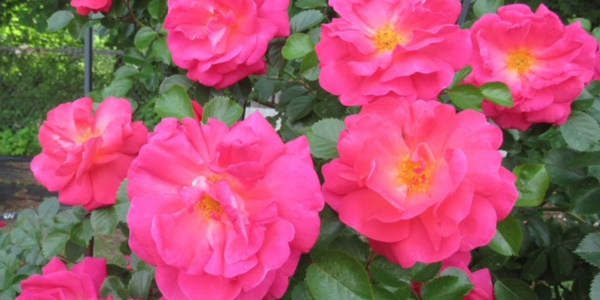
Most roses require full sun and grow best in well-draining organic soil with a pH between 6 and 7, according to the Chutes. They recommend adding fertilizer when the soil has warmed up, with late April to early May for the first feeding and in July after the first bloom cycle has gone by.
One common issue with roses, black spot, can be avoided by choosing a rose that is more disease resistant. Black spot is a fungus that loves warm, sticky weather, according to Rossi, and it takes over when the leaves are wet for a long period of time. “So, everything I do is about keeping the leaves dry and breaking the cycle,” he said. He recommends watering roses at the base, mulching so the rain doesn’t splash, and picking up each fallen leaf where the fungus hides.
Another thing to remember about roses is that they do require pruning, according to Joe Gloria, shrub yard manager at Gilbertie’s Garden Center. “Very few people like the idea of cutting and pruning,” Gloria said. But most roses, including the ones sold at Gilbertie’s, need that help for them to produce flowers and look healthy. Pruning also helps with the aforementioned spacing and air circulation.
Rossi recommends pruning in early spring as the buds start to swell. While hybrid tea roses require heavy pruning, most others need a lighter touch. Cuts should be made a quarter-inch above the bud, on a slant.
People also love roses because they have names. Rossi’s favorite rose is “The Queen Elizabeth” because it was his mother’s name and is his daughter’s middle name. “I always tell people every garden should have a few plants that carry the people you love in them,” he said.
So, even if you have been scared off by roses in the past, it might be time to reconsider adding one or more to your landscape. And take the time to stop and smell the national flower when you encounter them this summer.

Kerri Williams
Kerri Williams is an award-winning writer and journalist. She has worked as a reporter at the Norwalk Hour, as Living editor at the Darien News-Review, and managing editor for the Norwalk Citizen-News. For Westport Journal, she is a reporter as well as a gardening columnist, writing “Cultivating with Kerri.” She recently published her first children’s book – “Mabel’s Big Move,” based on her daughter with special needs.













Recent Comments