
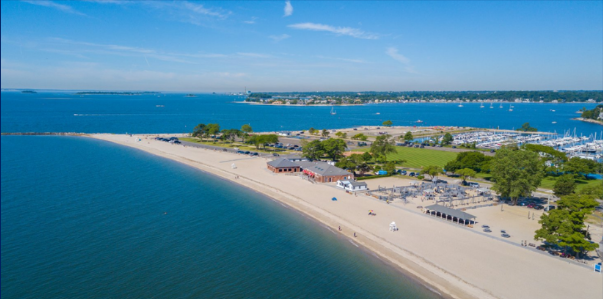

WESTPORT–The water quality at Compo Beach notched down to a C grade last year, largely because of rainstorms that wash pollution into Long Island Sound, according to an annual report released recently by the environmental group Save the Sound.
It was the beach’s lowest rating since the C- it received in 2017, and it is down from the A+ received in 2020. The current rating is based on the number of times, and the extent to which, water samples failed to meet federal safety standards during summer 2025.
Luci Bango, director of health for the Aspetuck Health District, which includes Westport, said the weekly samples have not exceeded the limit this year so far.
“All samples collected this season have been below the bacteria threshold for closures,” she said. She reminded beachgoers to always take precautions.
“Swimmers should always use caution when swimming and avoid swimming when they have open wounds or illnesses and rinse off after swimming,” she said. “It is a good idea to check the status of beach closures on our website and other local health sites to make sure bacterial levels are not elevated.”
The results show healthy water during dry weather, but spikes in bacteria levels when heavy rains fall, said Save the Sound Clean Water Advocate David Abreu. He said the results should not necessarily worry people but should make beachgoers a little more cautious about going into the water when heavy rains come.
“Just be a little bit more aware of your local water quality condition,” Abreu said, also advising bathers to heed local health department’s announcements and guidelines about swimming.
Save the Sound’s report is always based on data from the previous summer. It shows the number of times that tests found bacteria levels exceeded the U.S. Environmental Protection Agency’s maximum safety threshold of 104 “colony-forming units” of enterococci bacteria per 100 milliliters of water. The grade for each beach is a combination of how often the bacteria levels exceeded the limit, and how high it went.

The report shows that Compo Beach water samples failed to meet guidelines 9% of the time overall. But the frequency was much higher – 25% – during wet weather, while 6% of samples failed during dry weather, the report shows. The beach is not alone in receiving a lower grade.
“The 2025 Beach Report raises concerns about the water quality impacts of rain events driven by climate change,” says Save the Sound’s webpage on the report. “That overall percentage of A and B grades was down from our last Beach Report, when 78% of the monitored beaches received a B- or better.”
Rain water causes the issue when it rushes across roads, parking lots and other impervious surfaces, sweeping motor oil, grease, animal waste and other pollutants into the sound. It also can cause wastewater to overflow its systems and wash into the sound. And climate change is making matters worse, the report said, projecting it will continue to bring more frequent and more severe storms.
“Our 2025 Long Island Sound Beach Report demonstrates just how urgent it is that we prioritize new investment in sewage and stormwater infrastructure,” said David Ansel, vice president of Save the Sound’s Center for Water Protection. “If we’re not proactive, the impacts of climate change will undo so much of our successful past and ongoing work in restoring the water quality of the Sound.”





Recent Comments