
By Ken Valenti
WESTPORT–One night late in October 2025, Westport police officers received an alert from one of their stationary license plate readers showing that a Toyota Scion stolen out of Branford, Connecticut, was in Saugatuck.
Officers investigating found not only the stolen car, but a “ghost gun,” assembled from assorted parts and bearing no serial number inside.
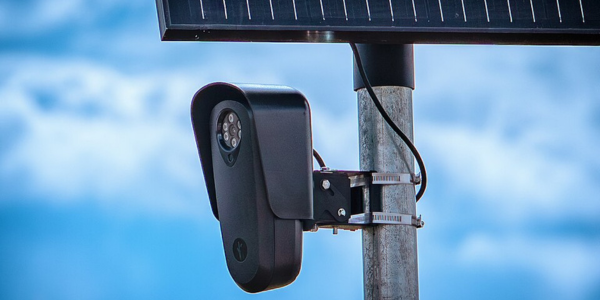
That was just one incident where the town’s 20 Flock license plate readers (LPRs) have helped law enforcement catch criminals and even prevent additional crimes since the department began using them in January 2025.
“LPR technology has many applications for law enforcement, including identifying vehicles involved in criminal activity, developing investigative leads and locating missing people to name a few,” said Lieutenant Anthony Prezioso, spokesman for the Westport Police.
But recently, Flock cameras, made by Flock Safety of Atlanta, Georgia, have made headlines because of worries that the use of the latest technology takes government’s prying too far beyond the less-advanced surveillance cameras that many have gotten used to.
“Flock’s ALPR cameras aren’t like your normal traffic cameras,” the ACLU cautions on its website. “This surveillance technology records and tracks every car that comes into view, and then an AI algorithm catalogs the make, model, color, license plate number, bumper stickers, and even scratches. This personal information is then uploaded into a nationwide database that any law enforcement agency with a Flock contract can search — with few regulations or oversight on how they use what they find.”
ACLU worries that the data can be used to track when someone visits a doctor, travels to a political rally or attends a particular house of worship.
Westport police employ practices and policies to safeguard people’s privacy and ensure that the cameras are used only for law enforcement, according to Prezioso, and a page called the camera transparency portal on the department’s website. The cameras do not use facial recognition technology and are not used to identify drivers or vehicle occupants. The data is deleted automatically after 21 days.
The department uses a combination of stationary readers by the town’s entrances and exits and others in police cars. They cost $80,000 per year for the town to maintain and operate, Prezioso said.
Prezioso said the technology’s value “is most evident when it helps officers identify a vehicle connected to a crime before additional crimes can occur.”
A car stolen in another community, for instance, can be flagged and stopped before it can be used in burglaries, robberies or other criminal activities locally, he said.
Earlier this month, Gov. Ned Lamont called on the Connecticut Police Officers Standards and Training Council to review the safety camera practices and develop guidance for their use, including recommended policies for police departments. He also asked municipalities to pause installation of any new cameras or license plate readers for the 30 days that the recommendations are being developed.
“I understand that this equipment is intended to keep our towns and roads safe—and that’s a good thing—but we must have clear policies in place regarding what is happening with this data, who has access to it, and how it can be used,” Lamont said in announcing the review.
Westporter Joe Wiles was concerned about the potential for inappropriate use of the cameras.
“On the surface, it seems OK but I’m a little wary of the police randomly collecting data on people,” said Wiles, 67. “Just broadly collecting license plate info for no reason, I think it’s a very slippery slope.”
Prezioso said the policies have evolved, including complying with recently passed state legislation. Officers are not allowed to conduct a search without specifying the class or crime they are investigating, Prezioso said. First Selectman Kevin Christie said he sees the benefits to their use, but understands the concerns he has heard recently from “a handful of residents” about “privacy, data retention and sharing, public notice and oversight,” he said.
“I believe license plate readers are a valuable public safety tool for Westport when they are used for legitimate law enforcement purposes with appropriate privacy protections, oversight and transparency,” Christie said. “Westport Police has policies and controls in place to support that responsible use, and the technology has helped identify stolen vehicles, make arrests and recover a firearm.”
Not everyone is concerned about their use.
Westport resident Ed Cribari said he was fine with the police using the cameras. Cribari, whose father was a police officer (and the namesake of the William F. Cribari Bridge over the Saugatuck River), said some may worry about a data breach. But, he said, that possibility is a fact of life in many areas, such as banking, cable accounts and so on.
“If it helps the police in what they need to do, I have no issue with those,” he said.

Ken Valenti
A career journalist and lifelong resident of the New York City region, Ken Valenti has enjoyed decades of reporting local, regional and national news in New York and Connecticut. Topics of special interest are development, the environment, Long Island Sound and transportation. When not reporting, he’s always on the lookout for the perfect coffee shop or used book sale.













Check out where the cameras are in Westport. https://maps.deflock.org/?lat=41.1760&lng=-73.3751&zoom=13.02
From the website: <>
WordPress doesn’t allow copy/paste. The website I mentioned above has a helpful link (“Learn More About ALPRs”) that explains why prioritizing property over privacy isn’t such a great idea.