
By Dirk Langeveld
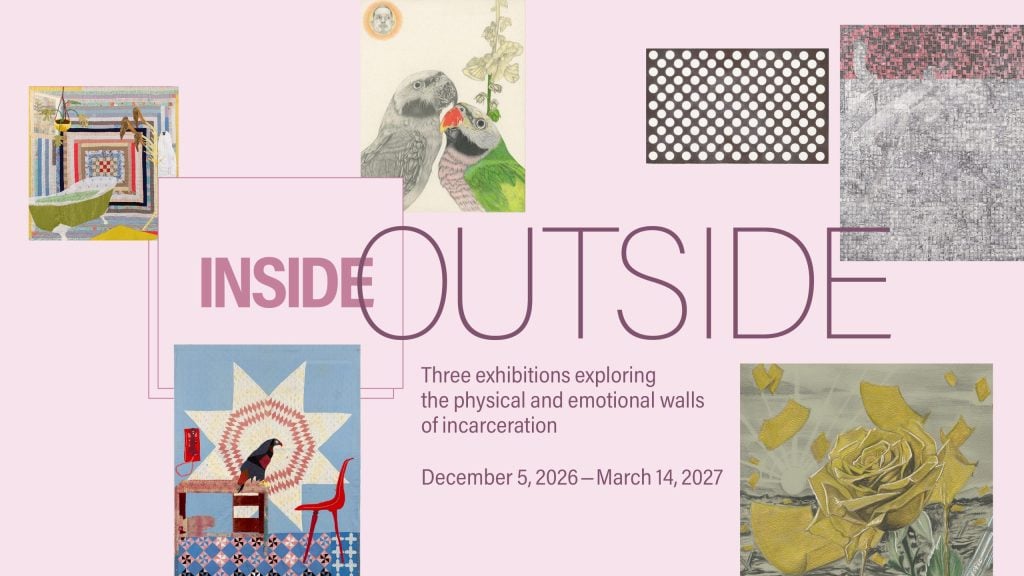
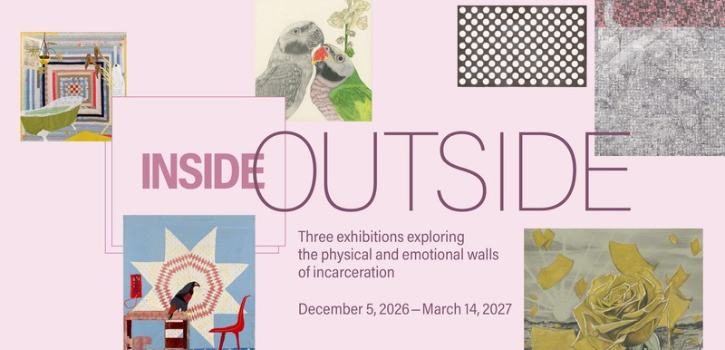
WESTPORT — An interconnected series of exhibitions at MoCA\CT will look at how the experience of incarceration has inspired some inmates to tap into creative outlets.
Inside/Outside will run from Saturday, Dec. 5th to March 14th. An opening reception will take place from 4 p.m. to 6 p.m. on the opening day.
MoCA\CT says the exhibitions “reveal how artistic creation preserves memory, asserts identity, and sustains connection in circumstances that restrict personal agency.” The goal of Inside/Outside is to create a stronger connection between imprisoned or formerly imprisoned artists and the broader public, allowing people to “encounter artists through their work, perspectives, and voices rather than their sentences.”
“With Inside Outside, our goal is to challenge the public to look past the confines of a cell and recognize the profound humanity, resilience, and extraordinary talent of those behind bars,” said MoCA\CT Executive Director Robin Jaffee Frank. “Art-making is a vital lifeline—it allows creators to transcend their physical environment and reminds all of us that an individual is never defined by a prison number or a sentence, but by their voice, imagination, and soul.
Jesse Krimes: Elegy Quilts
One of the featured exhibitions, Jesse Krimes’ Elegy Quilts, was organized by The Fabric Workshop and Museum in Philadelphia. It draws on Krimes’ own experience behind bars after earning a bachelor’s degree in studio art from Millersville University. After being convicted of cocaine possession, Krimes served five years of a six-year sentence.
While incarcerated, Krimes threw himself into artistic endeavors, producing works with prison-issued bars of soap and markers, along with bedsheets, hair gel, and contraband pencils. He managed to smuggle several of these works out of prison, while also establishing arts programs and co-founding multiracial creative collectives among his fellow inmates.
Following his release, Krimes founded the Center for Art and Advocacy, which he continues to lead as executive director, and leads a national fellowship that supports formerly incarcerated artists. His work has been displayed in several museums, and he was the subject of the Emmy Award-winning 2021 documentary Art and Krimes by Krimes.
In Elegy Quilts, Krimes uses donated clothing and textiles from currently or formerly imprisoned individuals in the assembly of elaborate quilts. By corresponding with and collaborating with these individuals, Krimes creates scenes that “function as communal acts of preservation, carrying narratives of loss, resilience, and connection.” Each quilt also features an animal figures selected by the prisoner to represent them.
The quilts are titled after the names of prisons holding large numbers of inmates, while the imagery is centered on personal narratives. One example is Marion, named for a federal prison in Illinois, features an empty chair and empty boots to represent the inmate’s memory of meditating in the woods behind his home as well as a crane to symbolize freedom.
CPA Prison Arts Show
Inside/Outside will also feature numerous works from people currently incarcerated in Connecticut prisons. Community Partners in Action, a Hartford nonprofit that provides services “that promote accountability, dignity and restoration for people affected by the criminal justice system,” will put more than 1,000 pieces of art on display. The CPA Prison Arts Annual Show will also include an audio and video installation, featuring the work of several formerly incarcerated artists.
This is the first time the show has been held at MoCA\CT, and the first time since 2007 that it has taken place in Fairfield County.
Artwork is often fashioned from items that are readily available in prison. Some pieces include jewelry boxes with spinning origami, Native American figurines made out of bread, and a life-sized dog made out of soap. The show also includes hundreds of paintings and drawings
“You will see several generations of an artist’s family posing for selfies with their artwork, while you will see parents visiting their child’s artwork several times throughout the run of the show, trying to reconcile the child they know with the crime that sent them to prison,” said Jeffrey Greene, a longtime CPA program manager and guest curator of the exhibition. “It is heavy. It is human. The Annual Show is a true jewel of the State of Connecticut, and should make us all proud of the work we are all doing to make our lives, and the lives of those around us, safer, healthier, and more hopeful.”
CPA’s Prison Arts Program was established in 1978, making it one of the longest running initiatives of its kind in the United States. It works with prison administrators, staff, and state agencies to help provide opportunities for people incarcerated in Connecticut to express themselves through art. CPA currently serves nine correctional institutions by providing visual arts workshops or supporting existing programs.
Anyone who submits a piece will have at least one artwork displayed in the show, as long as it is not gang-related or demeaning or victimizing of another individual. Most of the work comes from those who have taken part in CPA’s workshops, both newcomers and long-term participants, and the show also includes work by formerly incarcerated artists.
Greene says that people who undertake artistic endeavors while incarcerated develop personally through introspection, improved connection to others, skill development, and enhanced work ethic. He says one crucial result of the program is the development of empathy, as people become more curious about the artwork of others and understand that others are interested in their own work.
“Overall, when people start taking on personal long term art projects, their environment changes, the prison block changes, the attitudes of so many of those working or incarcerated in the prison changes,” said Greene. “A hopeless place becomes continually infected with clear moments of hopefulness.”
Greene says prisoners can develop the attitude that they are less than human during incarceration, which makes it more difficult for them to return to the community upon release. By contrast, participation in the arts program gives them a sense of pride and purpose.
“They have a strong work ethic and an intimate understanding of the time, patience, and determination it takes to succeed, either in an artwork or in any other aspect of their lives,” he said. “The rate of return to prison is a fraction of the state’s overall recidivism rate.
Veronica May Clark: Singing Inside a Glass of Water
The third exhibition in Inside/Outside features work by Veronica May Clark, who began serving a 75-year sentence in 2009. Greene was also the curator of Veronica May Clark: Singing Inside a Glass of Water.
Clark, formerly known as Nicholas Clark, was convicted of assaulting his estranged wife and murdering her new boyfriend in Waterbury in 2007. She has since identified as a transgender woman, and filed a lawsuit against the Connecticut Department of Corrections accusing it of failing to treat her gender dysphoria. A federal judge ruled in her favor in 2023, but the finding was overturned on appeal in 2025.
Clark has concentrated on using the limited art-making materials available in prison to their full effect. Originally using analytical, text-based drawings on notebook paper, she has since used deconstructed and reassembled fashion magazines and paper bags to “create works with lush, painterly depth that record persistence and identity.”
For more information on Inside/Outside, visit mocact.org.
Inside/Outside Opening Reception
Saturday, December 5
4:00 pm to 6:00 pm
MoCA\CT
19 Newtown Turnpike
Westport
Expanded coverage of Fairfield County cultural events is made possible with support from the Fairfield University Quick Center for the Arts

Dirk Langeveld
Dirk Langeveld has worked as a news reporter, content marketing specialist, and freelance writer. He is the author of “The Artful Dodger: The 20-Year Pursuit of World War I Draft Dodger Grover Cleveland Bergdoll” and has contributed to several books on Connecticut history.






Recent Comments